RPA vs. AI: Which Automation Is Right for You?
RPA vs. AI: differences, use cases, and criteria for choosing automation that reduces errors, operating time, and costs without holding back genuine growth.
A manually entered order in the business management system, an invoice to verify, a customer request to classify: these are seemingly simple tasks that, multiplied hundreds of times a month, slow growth. The comparison between RPA vs. AI is not about which is the most modern technology to buy, but about the most effective way to eliminate bottlenecks, errors, and repetitive work without losing control over processes.
So the right question is not whether to choose RPA or artificial intelligence. For many small and medium-sized businesses, the solution with the best return on investment combines both. The choice depends on the type of decision to automate, the quality of the available data, and how variable the process is.
RPA vs. AI: the operational difference
RPA, short for Robotic Process Automation, refers to software that performs repetitive digital tasks by following predefined rules. An RPA bot can access a portal, read a field, copy data into a business management system, generate a document, and send a notification. It works accurately and quickly, but it needs a clear, stable workflow based on explicit instructions.
AI tackles a different problem. It analyzes information, recognizes patterns, interprets natural language, classifies content, and produces responses or predictions. It can read an unstructured email, extract relevant information from a PDF, estimate the likelihood of a delivery delay, or suggest the most suitable response to a customer.
In short, RPA executes. AI interprets and makes decisions within defined limits. A software robot knows that when it receives a file with a particular structure, it must transfer the data into the business management system. An AI system can recognize a document even when its format changes, identify an urgent request, and suggest the next step.
This distinction helps avoid a common mistake: expecting RPA to have reasoning capabilities it does not possess, or using AI to automate tasks that require only simple, reliable rules.
When to choose RPA
RPA is particularly effective when a process involves high volumes, repetitive steps, and well-defined rules. You don't need a complex project to create value: often, all it takes is identifying a manual sequence that consumes many hours and involves multiple unintegrated systems.
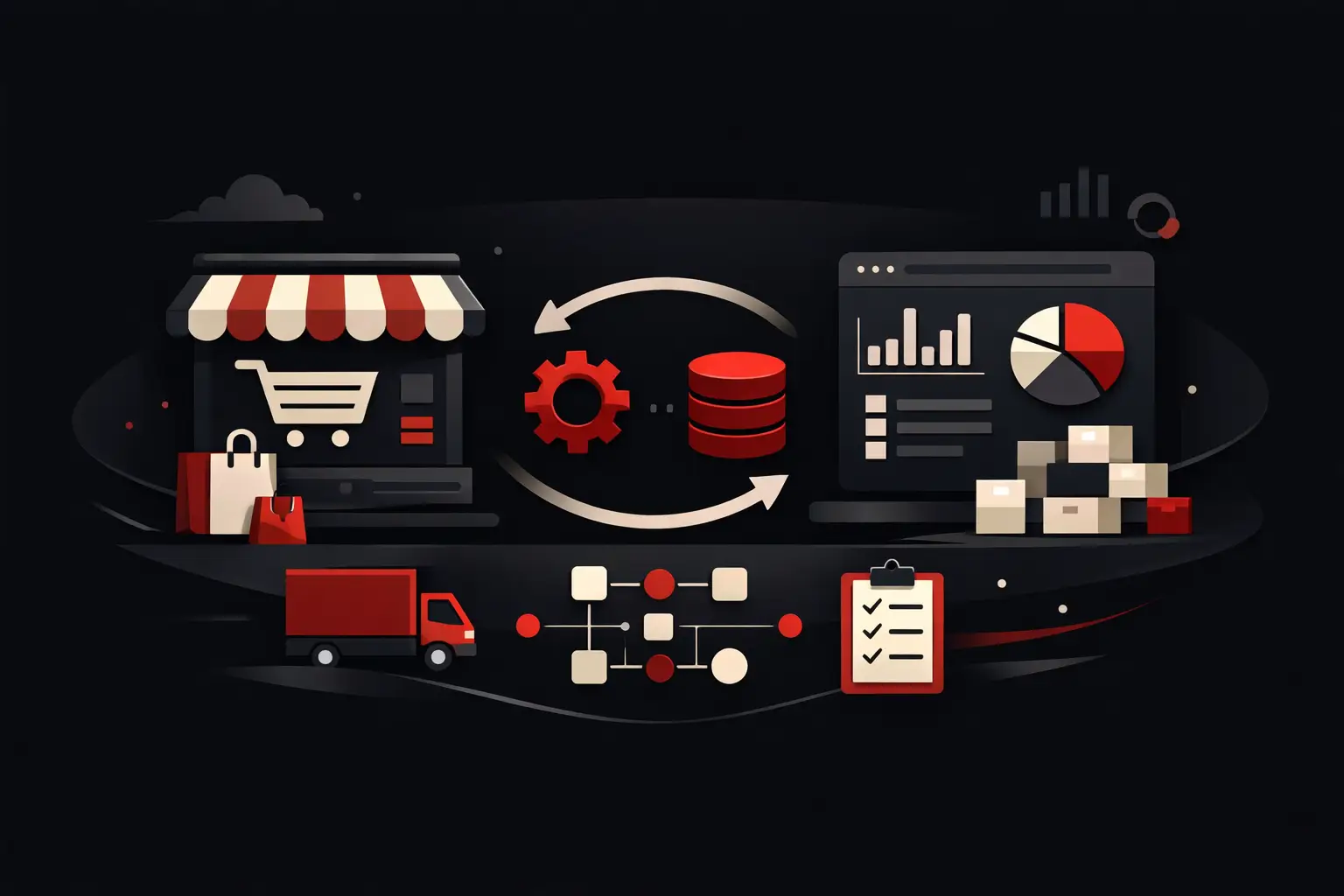
Order management is a practical example. A bot can receive orders from e-commerce sites, marketplaces, or structured emails, check availability in the business management system, update the status of the order, and send a confirmation. In the administrative cycle, it can match invoices against purchase orders, flag discrepancies, and file documents in the correct folder.
RPA is also suited to CRM updates, gathering reports from different portals, uploading data to legacy software, and handling cases with standardized fields. The benefits are measurable: fewer manual entries, shorter processing times, traceable operations, and fewer transcription errors.
There is, however, a clear limitation. If the process changes frequently, involves many exceptions, or requires human judgment, a bot built on rigid rules can become fragile. Automating an inefficient workflow does not improve it: it simply makes it faster at producing inefficiency.
The prerequisite: an orderly process
Before introducing an RPA bot, you need to map the actual workflow, not the one imagined on paper. Who initiates the case? Which tools does it pass through? What data is needed? Where do exceptions, manual checks, and wait times occur?
This work often brings duplication, incomplete data, and unclear responsibilities to light. In some cases, the answer is not a bot but integration between the CRM, business management system, and e-commerce platform. In others, you need custom software to centralize the process before automating it.
When AI creates more value
Artificial intelligence becomes relevant when information does not arrive in an orderly format or when the process requires interpretation. Consider support requests received by email, WhatsApp, or web forms: each customer describes the issue in different words, attaches different documents, and may have different priorities.
An AI system can classify requests, extract data such as order number and product, identify the level of urgency, and route the ticket to the right team. It can also prepare a response that follows company procedures, leaving approval to an operator in more sensitive cases.
In sales, AI can analyze CRM data, purchase history, and website behavior to identify leads more likely to convert or customers at risk of leaving. In the supply chain, it can support demand forecasting, detect inventory anomalies, and flag potential delays.
The result is not just speed. It is the ability to handle greater complexity without proportionally increasing the team's workload. However, AI does not automatically replace business judgment. Its responses need to be designed, tested, and monitored, especially when they affect prices, contracts, personal data, or communications with customers.
Generative AI and predictive AI are not the same thing
In everyday language, people talk about AI as though it were a single tool. For a business, however, the distinction matters. Generative AI produces text, summaries, email drafts, content, and conversational responses. It is useful for customer service, internal knowledge bases, and sales support.
Predictive AI, on the other hand, uses historical data to estimate future events or identify anomalies. It can help forecast sales, contact priorities, risk of non-payment, or inventory needs. Both can create value, but they require different data, objectives, and metrics.
The most effective model: AI interprets, RPA acts
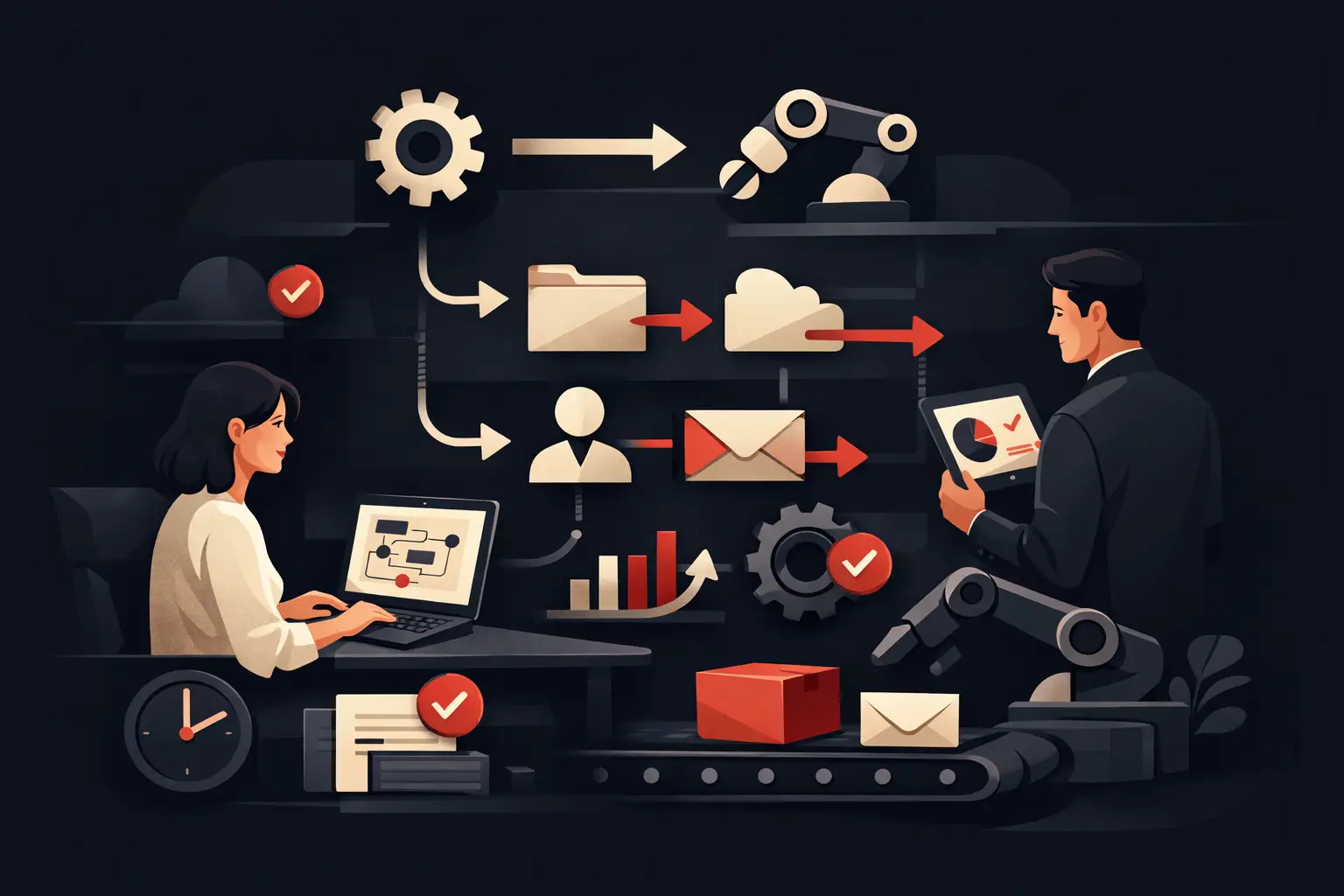
The contrast between RPA and AI loses its meaning when you look at an end-to-end process. AI can read and understand unstructured input; RPA can carry out the action in business systems. Together, they turn a request into a complete operational workflow.
Consider a B2B company that receives quote requests by email. AI reads the message and attachments, extracts products, quantities, technical specifications, and deadlines. It checks for missing information and classifies the priority. RPA creates the opportunity in the CRM, retrieves price lists and availability from the business management system, assigns the sales representative, and prepares the necessary documentation.
People step in where they are truly needed: negotiation, technical verification, exceptions, and customer relationships. The system, meanwhile, reduces the time spent searching for data, copying information, and chasing handoffs between departments.
This architecture is often more sustainable than a standalone chatbot or a bot that tries to handle cases that are too variable. Value comes from integrating tools, data, and operational responsibilities.
How to assess the investment
The priority should not be the technology, but the cost of inefficiency. A process deserves attention when it involves significant volumes, requires many manual hours, causes costly errors, or slows down a critical stage of the sales process.
To assess a project, it is useful to measure the average time per case, the number of errors or rework instances, the hourly cost of the activities involved, customer response times, and the volume handled each month. These indicators make it possible to estimate a realistic ROI rather than relying on generic promises of automation.
Exceptions should also be considered. If 90% of cases are standard and 10% require evaluation, automation can focus on the first group and immediately flag the second for the appropriate team. You don't need to automate everything to make a significant impact.
Data security is another key criterion. Processes involving financial, personal, or commercially sensitive data require permissions, activity logs, retention policies, and clear governance. Speed without control is not efficiency.
From technology project to operational lever
The costliest mistake is buying a platform and expecting it to solve process problems on its own. Technology works when it is part of a clear operational design: objectives, data sources, integrations, responsibilities, and KPIs.
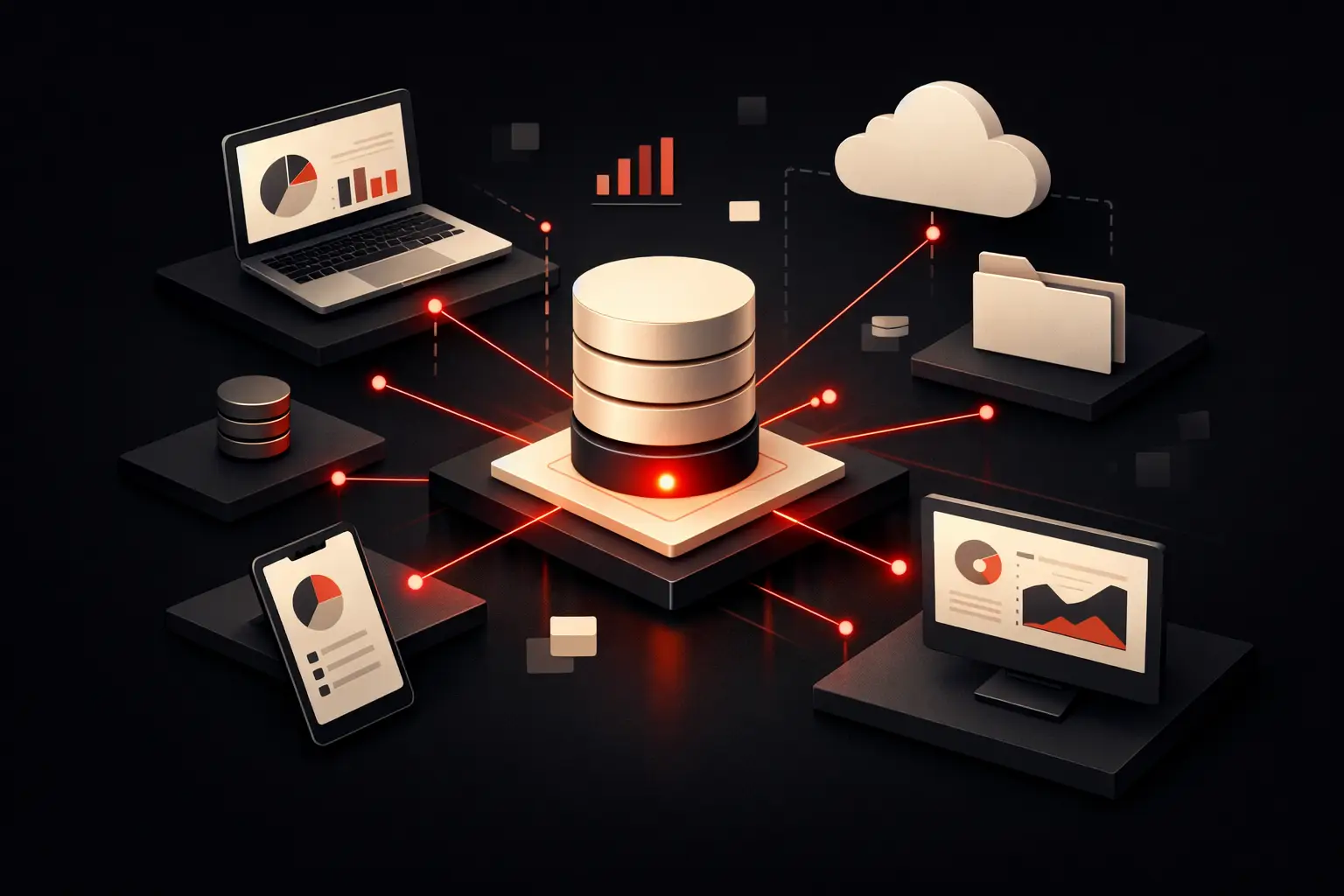
That is why an effective project starts with a concrete analysis of the most burdensome workflows, defines an initial use case with a measurable outcome, and builds a system that can expand over time. A customized CRM, an integrated business management system or a KPI dashboard can become the foundation for RPA bots and AI agents to operate using reliable data.
For small and medium-sized businesses, choosing between RPA and AI should not become a choice between simplicity and innovation. What is needed is a solution proportionate to the problem, designed around real workflows and capable of freeing up time for activities that improve customer relationships, margins, and control. This is where Graffico turns operational complexity into measurable value.
Ready to bring your ideas to life?
Request a free, no-obligation consultation. Let's talk about your project.
Request a consultation