How to Centralize Scattered Business Data
Discover how to centralize scattered business data, reduce errors, and build connected, measurable processes that are ready to grow over time, every day.
A sales rep updates the CRM, the administration team works in a business management system, the warehouse uses Excel spreadsheets, and customer care receives requests by email and WhatsApp. When someone needs a reliable figure, they have to reconstruct it by hand. Understanding how to centralize scattered business data means breaking this cycle: instead of hurriedly gathering files before a meeting, create an information foundation that helps sales, operations, and decision-making move faster.
The problem is not just technological. Fragmented data leads to inconsistent quotes, duplicate orders, customers contacted twice, outdated inventory, and reports that arrive after they are useful. Every manual step increases the risk of error and takes time away from value-producing work. For an SME, centralizing does not necessarily mean replacing all existing tools: it means defining where each piece of information lives, who updates it, and how it should flow.
Why scattered data slows growth
Fragmentation almost always grows for understandable reasons. A company introduces invoicing software, then a CRM for sales, an e-commerce platform, a ticketing system, and personal tools adopted by teams to resolve operational emergencies. Each choice can be valid on its own. The cost emerges when these systems do not communicate.
At that point, there is no longer a single customer record. There are different versions of the same customer, with misaligned addresses, commercial terms, privacy consents, and order statuses. The same happens with products, price lists, suppliers, and jobs. Management ends up debating whether the data is reliable instead of using it to make decisions.
The most visible consequence is the time spent reconciling data. Less obvious is the loss of predictability: if it is unclear which leads are coming in, how much the pipeline is worth, where orders are getting stuck, or which customers generate margin, it becomes harder to plan investments and operational capacity. Centralizing data is about building control, not adding yet another dashboard to check.
How to centralize scattered business data without creating chaos
An effective project starts with processes, not software. Buying a new business management system without defining responsibilities, workflows, and information quality risks moving the disorder into a more expensive environment. First, you need to understand the data’s actual journey: where it originates, who changes it, where it is copied, and which activity depends on that information.
Map sources, duplicates, and bottlenecks
The first step is to inventory active sources: ERP or business management system, CRM, e-commerce, marketing tools, production software, spreadsheets, cloud archives, email, and support platforms. Simply listing them is not enough. For each one, identify the data it manages, how often it is updated, who is responsible, and how it is used operationally.
It helps to approach this analysis with concrete questions. Where is a new customer created? Which system defines the correct price? Who updates warehouse availability? Which source is used to calculate revenue? If the answer changes depending on who you ask, the process is not under control.
This stage often reveals the most costly duplication. An Excel file may contain information that should be read from the business management system. A sales rep may update important notes only in their own tool. An order placed online may have to be manually entered again by the administration team. These are not minor details: they are points where delays and opportunities for error accumulate.
Define an authoritative source for every data item
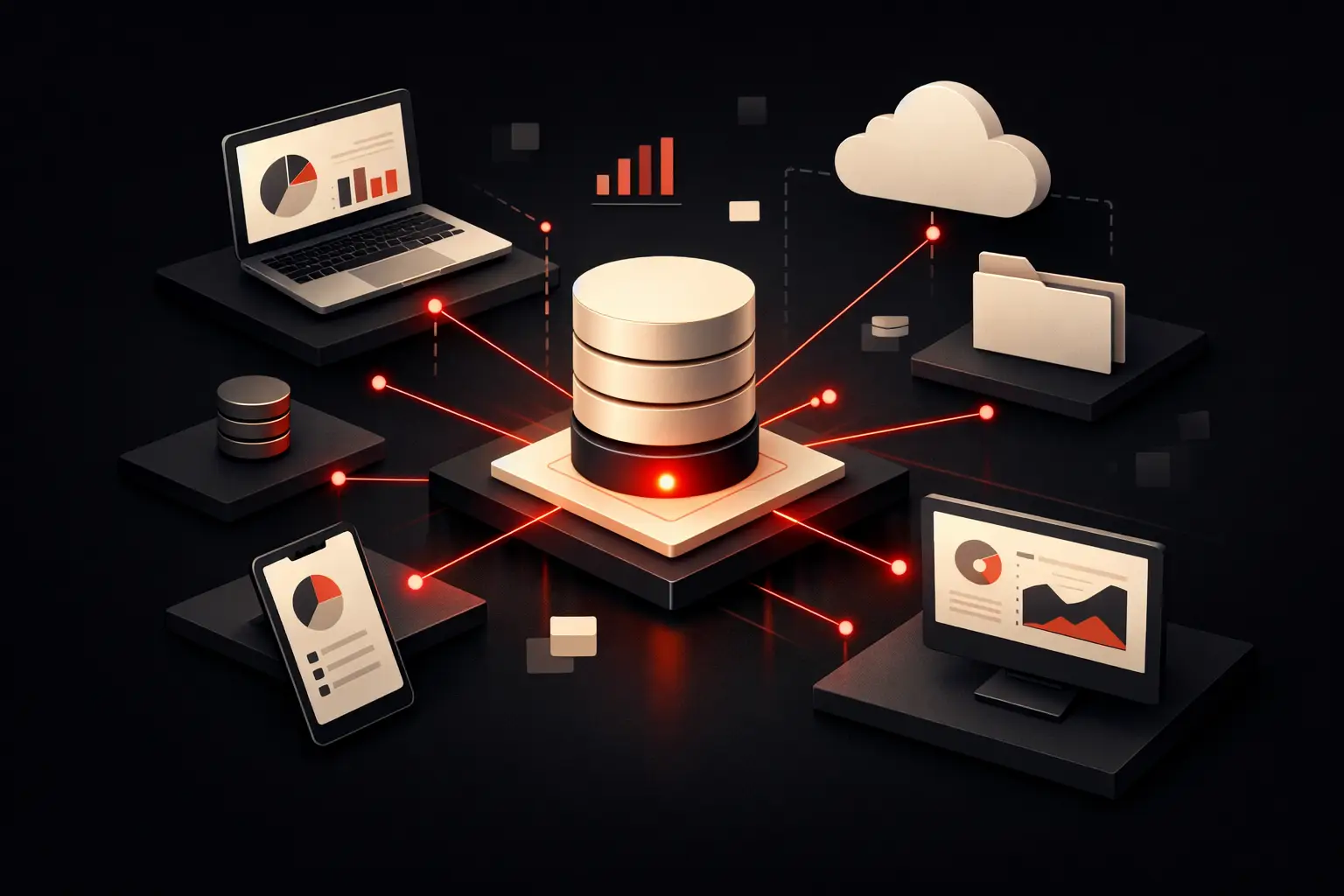
Centralizing does not mean forcing everyone to work in the same application. In many companies, the best solution is an integrated ecosystem in which each system retains its own function while sharing reliable data. The key principle is to establish an authoritative source, also known as a single source of truth, for each category of information.
The CRM can be the primary source for customer records and sales opportunities. The business management system can govern invoices, transactions, and administrative terms. The warehouse system can hold available stock levels. A dashboard can aggregate these data for management review, but it should not become a parallel archive that must be updated manually.
The choice depends on the operating model. A company with complex sales processes may put the CRM at the center. A manufacturing or distribution business will often have its business management system as the core. A company that works on a project basis may need custom software that connects negotiations, planning, progress, and margins. The goal is not to impose a standard structure, but to make data ownership unambiguous.
Connect systems with reliable integrations
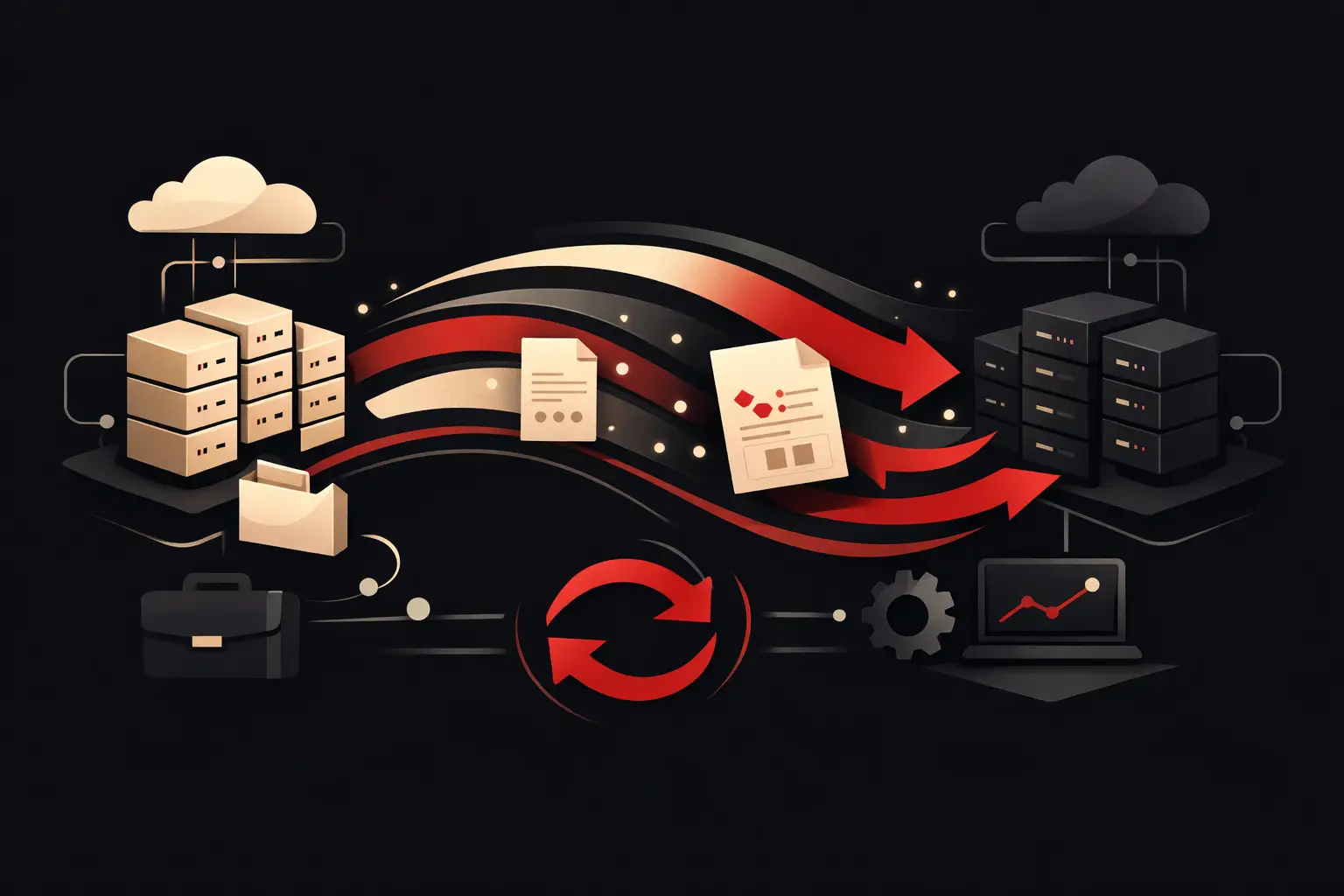
Once roles and priorities have been defined, integrations come into play. APIs, connectors, webhooks, and automations make it possible to synchronize information between systems without manual exports and imports. For example, a qualified lead can automatically create a CRM record, an e-commerce order can feed into the business management system, or opening a ticket can make the customer’s purchase history visible to customer care.
Not all synchronization needs to be bidirectional. In fact, replicating every change everywhere can create conflicts. Decide precisely which system sends the data, which receives it, when the update takes place, and what happens if a record fails validation. A well-designed integration automates repetitive work; a poorly designed one multiplies errors at greater speed.
For complex workflows, a central integration layer or operational database may be preferable to point-to-point connections. This architecture requires more upfront design, but simplifies maintenance as tools and processes evolve. For smaller businesses, a direct connection between two or three essential applications may be enough. The right solution depends on volume, criticality, and growth prospects.
Clean data, clear rules, useful dashboards
No centralization works with inconsistent records. Before migration or synchronization, customer and other master records need to be standardized: remove duplicates, align formats, complete essential fields, and archive data that is no longer relevant. This takes time, but ignoring it means making existing problems permanent.
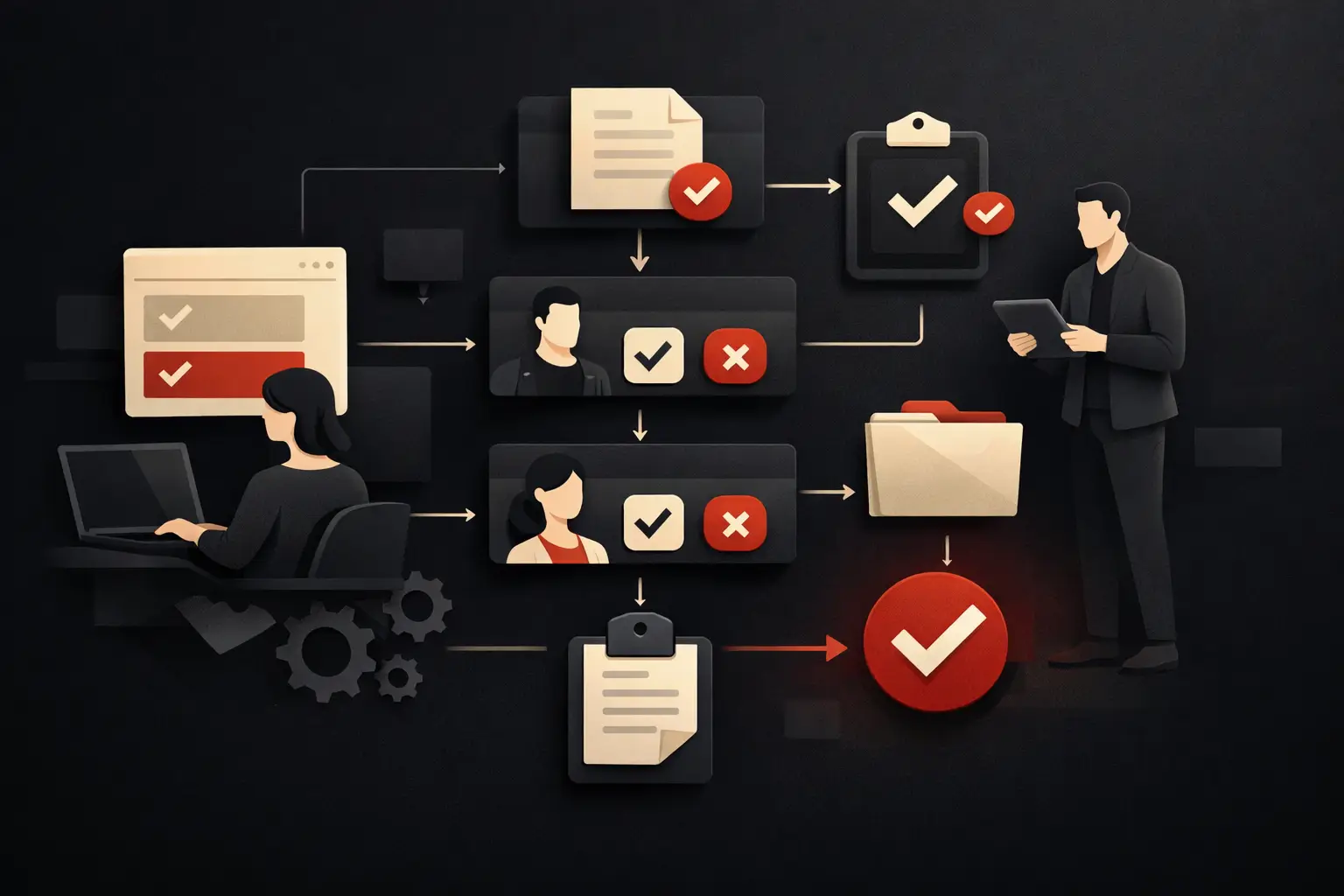
You also need data governance rules that are proportionate to the company. Who can create a new customer? Which fields are mandatory? How is a change of company name handled? Who approves changes to price lists and terms? These procedures should not slow staff down: they should prevent every team from inventing its own version of the process.
Only after establishing a reliable foundation does it make sense to build KPI dashboards. A useful dashboard does not show everything. It shows figures that guide action: opportunity conversion, average fulfillment time, order book value, margins by job, overdue payments, repeat purchase rate, or customer care workload. If a data point does not suggest a decision, it probably should not take up space on the management view.
A realistic four-phase approach
To limit risks and operational disruption, it is best to proceed by priority. A well-governed centralization project generally follows four phases:
- process and source analysis, identifying bottlenecks and KPIs to improve;
- definition of the data architecture, authoritative sources, and access rules;
- cleanup, migration, and integration of selected systems, with testing on real-world cases;
- operational adoption, team training, and monitoring results in the first few months.
The sequence matters. Starting with the dashboard is tempting because it produces a visible result, but without reliable data, the outcome is elegant, not very useful reports. Starting with a single high-impact process, such as order-to-invoice or lead-to-quote management, makes it possible to demonstrate return on investment and build internal support.
It is just as important to involve the people who use the tools every day. The operations manager knows about exceptions and manual steps that do not appear in diagrams. The administration team knows which fields need to be correct to avoid tax errors. The sales rep can say what information is actually needed before a call. Technology must reflect the real work, not work imagined in a presentation.
How to measure the return on centralization
ROI is not just about hours saved, although those can be significant. It should be measured by comparing before and after using operational and commercial indicators: order entry time, number of errors, customer response speed, time required to produce a report, lead conversion, overdue debt recovery, and the ability to handle greater volumes without proportionally increasing headcount.
But it is important to be realistic. Centralizing data does not fix a weak sales process, unclear price lists, or ambiguous responsibilities. It makes these problems visible and easier to manage. This is precisely where a custom solution can make a difference: when a company’s distinctive workflows do not fit standard software without workarounds, the system must adapt to the process that creates value.
A project partner like Graffico can translate this complexity into a concrete architecture: integrations, tailored CRM, business management systems, automations and dashboards built around actual workflows. The expected result is not a collection of new tools, but fewer manual steps, faster decisions, and data ready to support the next stage of growth.
The place to start tomorrow is simple: choose a process in which people currently copy information from one system to another. If that step can become automatic and traceable, you have already turned invisible data sprawl into measurable value.
Ready to bring your ideas to life?
Request a free, no-obligation consultation. Let's talk about your project.
Request a consultation