Enterprise generative AI: where it creates value
Enterprise generative AI automates tasks, improves decisions and speeds up work when integrated with processes, data and genuinely measurable goals.
A sales representative spends twenty minutes preparing a proposal using previous quotes, price lists and scattered notes. A customer care agent searches three different systems for the same answer. An operations manager reconstructs a report every week by copying data from spreadsheets. In these areas, enterprise generative AI can have a tangible impact: it does not replace people’s work, but eliminates repetitive steps, reduces search time and makes information usable when it is needed.
The point is not to add a chat feature to a website or roll out a new tool to the team. Value comes when AI becomes part of a real process, accesses only the right sources and returns a verifiable output: a draft response, a summary, a classification, an alert or an action initiated in the business management system. Concrete results, not promises.
Enterprise generative AI: start with bottlenecks
Not every company needs the same AI project. A manufacturing SME may want to reduce the time needed to consult technical data sheets, bills of materials and sales documentation. A services company may need to qualify incoming requests and prepare quotes faster. An e-commerce business may aim to handle after-sales questions without keeping customers waiting.
For this reason, the first step is not to choose a language model. It is to map a workflow and identify where manual work, errors, delays or duplication build up. It is worth focusing on frequent, measurable processes where the cost of inefficiency is already visible: repetitive tickets, data entry, document retrieval, CRM updates, meeting summaries, order checks and preparation of communications.
A good use case has three characteristics. It has an available, organizable input, a clear output and an owner who can assess its quality. If any of these conditions is missing, the project risks becoming an interesting demo that is difficult to put into production.
Not every task should be automated
Generative AI is highly effective at reading, summarizing, classifying and producing a first draft of text content. It is less suited to making autonomous decisions about contractual exceptions, financial terms outside policy or situations with significant legal and reputational consequences. In these cases, the best setup is often human-in-the-loop: the system prepares, flags and suggests, while a person approves.
This distinction protects both quality and internal trust. Automating an unstable process does not solve the problem: it only makes it faster. First define rules, responsibilities and reliable data; then decide where AI can intervene.
Where AI creates operational impact
In customer care, an AI assistant can consult the knowledge base, order status and company policies to suggest consistent responses to agents. When designed with controlled sources, it reduces average handling time and maintains the brand’s tone. For simple, well-defined requests, it can also handle some conversations autonomously, escalating complex cases to the team.
In sales, AI can turn notes, emails and calls into structured CRM data, prepare personalized follow-ups and create a draft proposal based on catalogs, price lists and previous cases. The benefit is not sending more messages: it is enabling salespeople to be more present in negotiations, with less time spent on administrative tasks.
In operations and administration, the potential lies in document management. Orders, purchase requests, transport documents and supplier communications can be read, extracted and routed to the right workflow. When these steps are integrated with business management software, dashboards and control procedures, transcription, delays and inconsistencies are reduced.
Management analysis can also become more accessible. A system can generate an initial commentary on KPIs, highlight anomalies against defined thresholds and summarize information by area or period. It does not replace a manager’s analysis, but shortens the distance between data and decision.
Data, integrations and interface: the project beyond the model
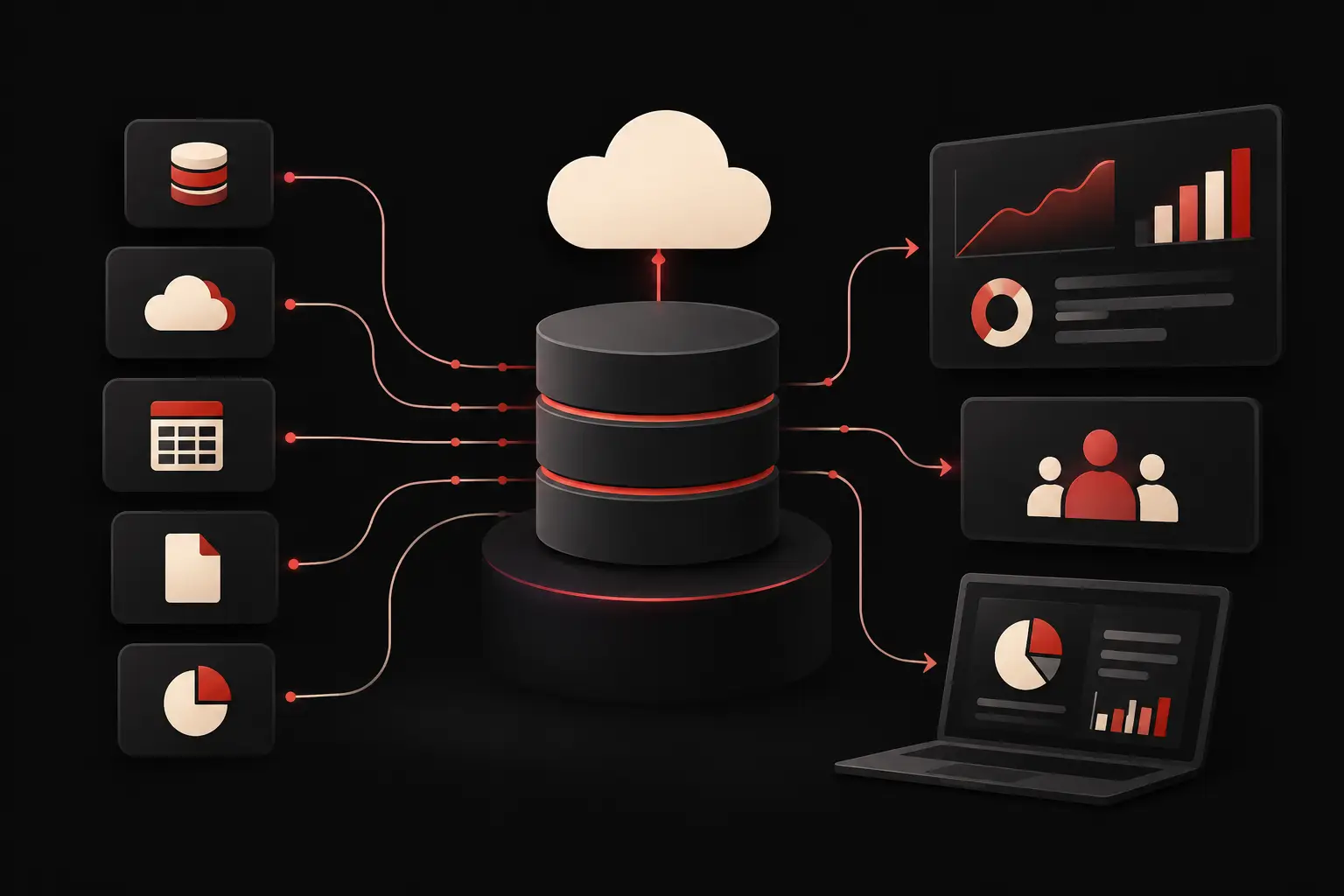
A generative model does not automatically know a particular company’s procedures, price lists, customers and rules. To respond accurately, it must be able to retrieve up-to-date content from authorized sources: a CRM, a business management system, a document repository, a knowledge base or a proprietary database. A decisive part of the value is created here.
An assistant given outdated documents may produce convincing but incorrect answers. An agent that is not connected to operational systems remains a simple conversational interface and forces people to copy information from one screen to another. By contrast, a well-designed integration lets AI read the context, suggest the next action and record the outcome in the right system.
User experience matters too. If an operator has to remember complex instructions or switch environments to use the system, adoption falls. A custom interface can present AI at the exact point in the workflow: next to a ticket, within a customer record, on a dashboard or in a supplier portal. Design and development are not separate from efficiency: they determine how quickly a solution is understood, used and perceived as reliable.
Security and control are not technical details
Bringing AI into business processes requires careful design of roles, access and traceability. Not everyone should be able to query the same data, and an assistant should not be free to carry out every operation. Permissions should be inherited from existing systems or defined through clear rules, distinguishing who can read, edit, approve or export information.
It is also useful to log relevant interactions: which sources were used, what output was generated, who approved it and what action was initiated. This makes the system controllable and allows instructions, rules and sources to be corrected when recurring errors emerge.
Privacy must be addressed from the architecture stage, especially when workflows include personal data, financial information, confidential content or customer documentation. The right solution depends on the sector, the categories of data and the platforms involved. There is no single configuration that works for every business: there is a scope that needs to be designed and documented.
How to measure the return on enterprise generative AI
Measuring only the number of conversations or texts produced is not enough. A useful project starts with a baseline: how long an activity takes today, how many errors it generates, what response times are, how many requests go unanswered and what operational cost it entails.
After launch, metrics should track the use case. For customer care, they may include average handling time, first-contact resolution rate and customer satisfaction. For sales, lead response speed, CRM data quality and conversion rate. For operations, processing times, exceptions detected and reduction in manual tasks.
ROI does not come always from an immediate reduction in headcount. More often, it translates into freed-up capacity: the same team handles greater volumes, responds better, reduces delays and focuses on tasks that require human expertise. This is particularly important for SMEs that want to grow without immediately expanding their in-house team.
A gradual path, designed to scale
The most effective project tends to start with a narrow but high-impact scope. A workflow is analyzed, the necessary sources are connected, rules and permissions are defined, output quality is tested against real-world cases, and the solution is released to a pilot group. Only after adoption and results have been verified is the solution extended to other departments or processes.
This approach avoids two common mistakes: building an overly broad platform before validating the need, and stopping at a prototype with no integrations. The goal is to create an operational component that improves over time, not an isolated technology demo.
For Graffico, designing AI solutions means turning everyday needs into software, automations and measurable interfaces. The useful question is not “How can we use AI?” but “Which step is slowing growth today, and what result do we want to improve?” That is where a project begins—one that can be tested, governed and scaled using concrete criteria.
Ready to bring your ideas to life?
Request a free, no-obligation consultation. Let's talk about your project.
Request a consultation