AI Chatbot vs. Human Agent: Which Should You Choose?
AI chatbot vs. human agent: discover how to allocate support, sales, and complex requests to reduce costs, response times, and manual work.
A request goes unanswered for two hours, a lead goes cold, and the team wastes time copying data between email, the CRM, and the business management system. This is where the AI chatbot vs. human agent debate stops being theoretical. For an SME, the useful question is not which one is better in absolute terms, but which tasks should be automated, which require a person, and how to make the two channels work together without creating new inefficiencies.
A well-designed chatbot does not indiscriminately replace customer care. It takes on repetitive work, gathers complete information, and brings the agent in when their expertise can truly add value. The result is not simply faster service: it is a more controllable, measurable, and scalable process.
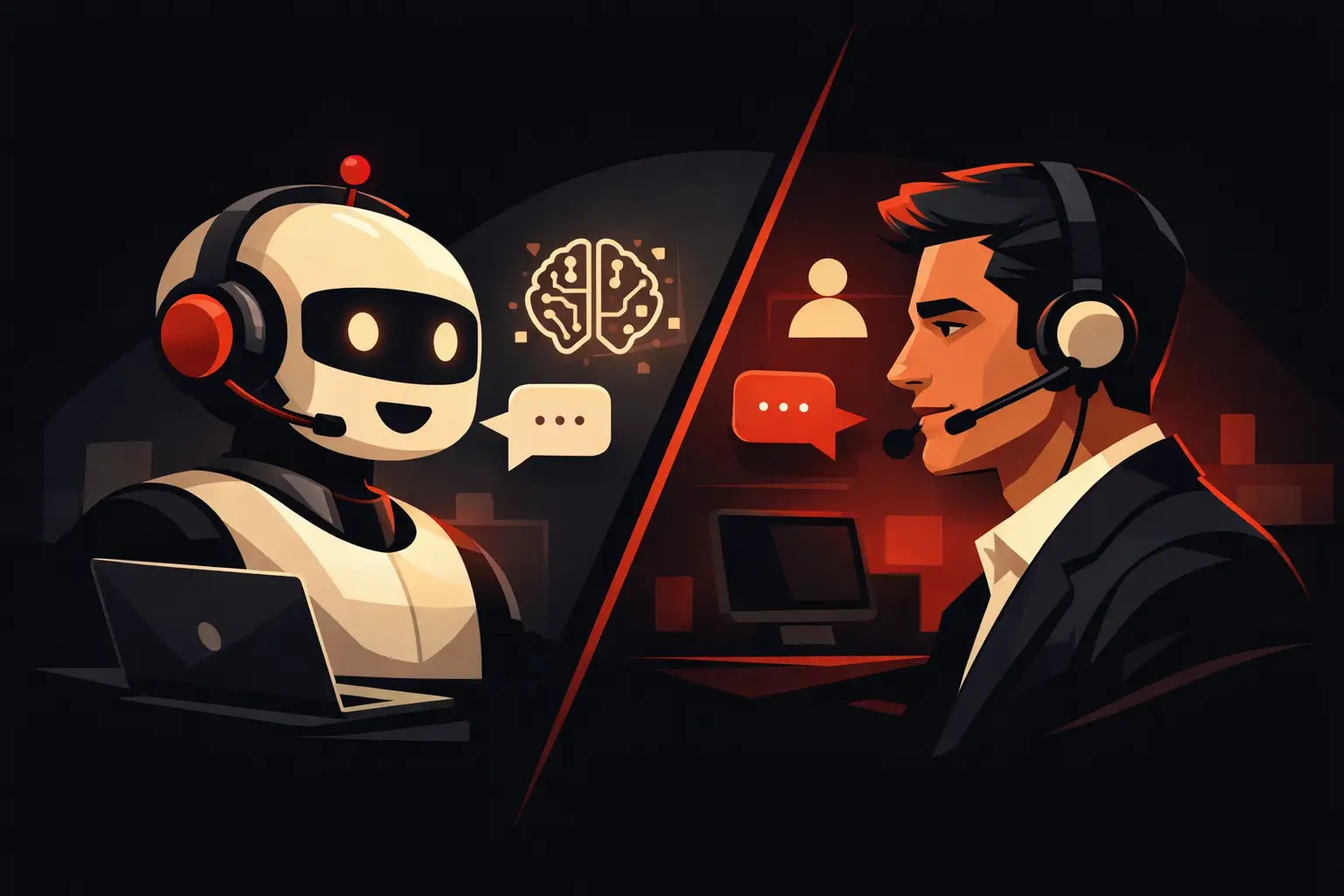
AI Chatbot vs. Human Agent: The Real Comparison
An AI chatbot wins when volumes are high, questions are recurring, and answers can be based on data already available. Opening hours, order status, availability, return procedures, documentation, initial contact qualification, and appointment scheduling are typical use cases. A virtual assistant can respond 24 hours a day, handle many conversations simultaneously, and maintain a consistent standard even during peak periods.
Human agents remain decisive when judgment, negotiation, empathy, or decision-making responsibility is needed. A strategic customer reporting a service issue, a negotiation involving non-standard terms, an ambiguous technical request, or a complaint that could damage the business relationship should not end up in an automated flow without supervision. In these scenarios, a correct but impersonal response can cost more than the extra handling time.
The comparison, then, is not about the ability to “talk” to the customer. It is about the nature of the process. AI is extremely effective at recognizing intent, consulting an information base, asking guided questions, and initiating workflows. People are more effective at handling exceptions, relationship context, and decisions that require discretion.
Where AI Delivers a Measurable Advantage
An AI-powered chatbot can tangibly reduce the team's workload if it is connected to the right business systems. Without integrations, it remains a conversational storefront: it answers general questions but does not truly resolve the request.
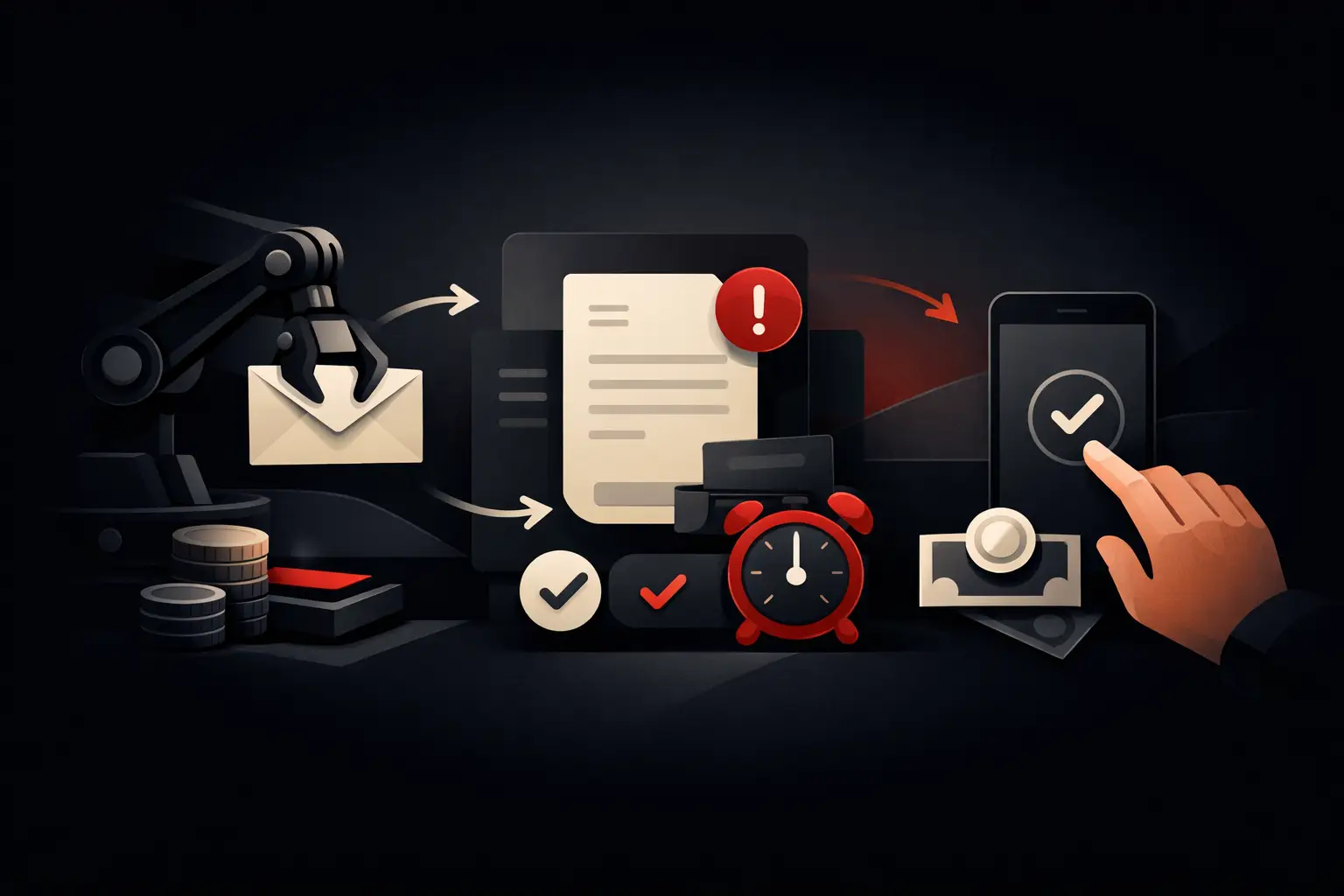
When connected to a CRM, business management system, e-commerce platform, calendar, and knowledge base, it can identify the customer, check the status of a case, suggest an available time slot, create a ticket, and update a contact record. Every step eliminated reduces idle time, duplicate data entry, and errors. For a company receiving dozens or hundreds of requests a day, the benefit is significant: it frees up working hours for sales, specialist support, and quality control.
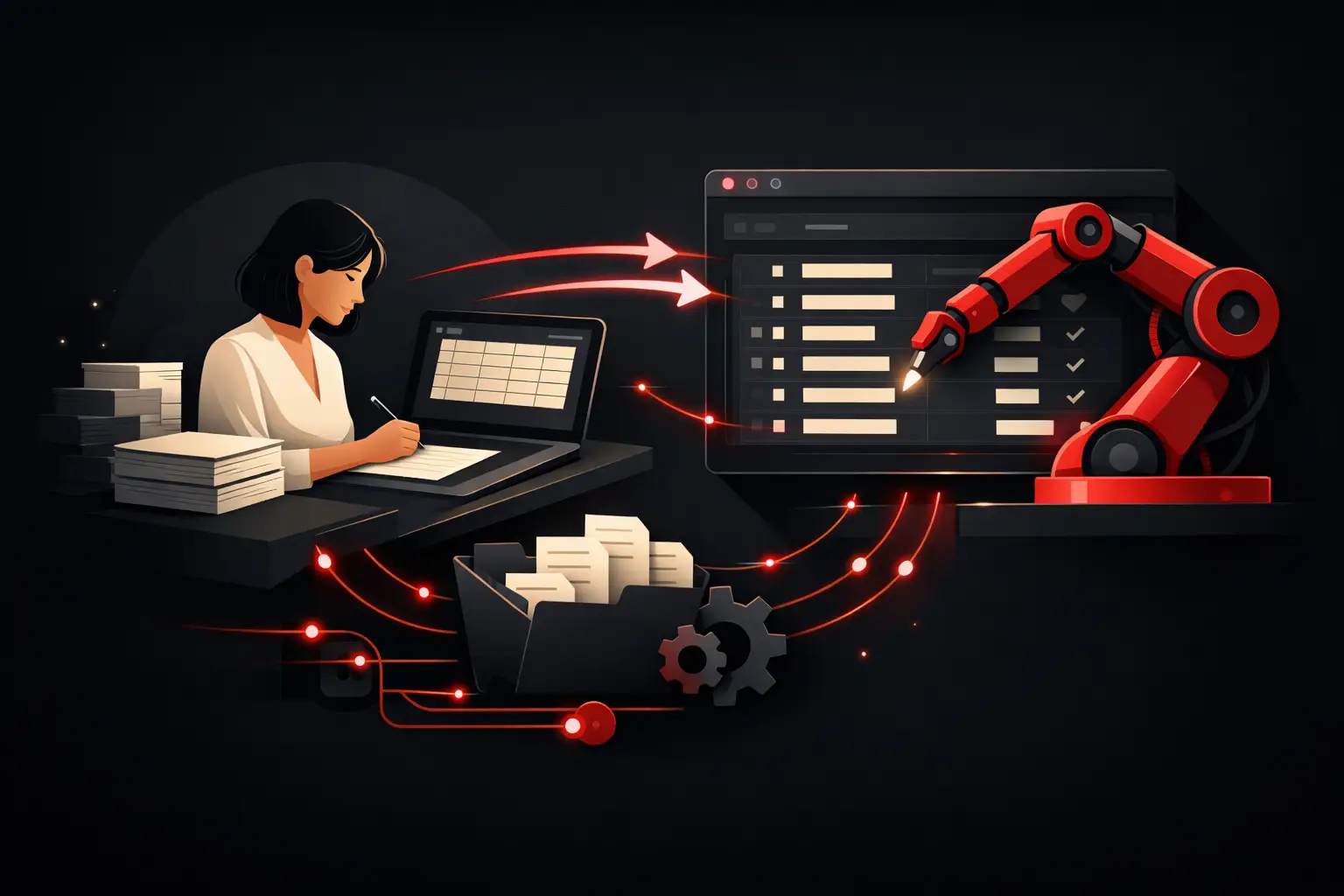
Another benefit is structured data collection. An agent may forget to ask a question, interpret a field differently, or fail to update the CRM during a peak period. A well-designed flow always asks for the required information and saves it in the right place. This also improves the quality of analysis: you can understand which questions generate the most contacts, where the journey breaks down, and which problems recur most often.
Where a Chatbot Can Worsen the Experience
Automating an unclear conversation does not improve service; it just frustrates the customer faster. The most common problem is not the technology but the wrong scope: bots trained on incomplete content, responses that promise what the system cannot verify, or flows with no way out to a human agent.
A chatbot should not invent information or independently handle sensitive tasks such as contract changes, price exceptions, refund decisions, or regulated guidance. It must state precisely what it can do, hand the conversation over to a person when it detects uncertainty, and transfer the context already gathered as well. Asking the customer to repeat everything is one of the costliest mistakes in terms of perceived service quality.
Quality also depends on language. If the brand serves B2B customers, the conversation should be direct, professional, and solution-oriented. Vague wording, overly generic answers, and artificially friendly tones reduce trust. A conversational interface is a commercial touchpoint: it should be designed with the same care as a customer portal or sales process.
When to Choose a Chatbot, an Agent, or a Hybrid Model
The most efficient choice is almost always a hybrid model. The chatbot handles the first level, and the agent receives only the cases with greater value or complexity. This does not mean relegating the human team to problems: it means protecting their time.
An e-commerce business receiving many questions about shipping and returns can automate order lookups and the start of the standard procedure, forwarding only damaged items, unusual delays, or exceptions to a staff member. A services company can use AI to qualify needs and collect budget, timing, and industry, then assign leads that meet the defined criteria to a salesperson. A professional practice can filter initial requests, schedule appointments, and collect documents, leaving the case assessment to the consultant.
A chatbot is preferable if the process has clear rules, reliable information, and enough volume to justify automation. A human agent is preferable if every conversation is different, the financial or reputational stakes are high, and the required data is unavailable in integrated systems. The hybrid model works when you want to increase operational capacity without immediately expanding the internal team.
Designing the Handoff from AI to People
A handoff to an agent should not happen only when the chatbot “doesn't understand.” It should be defined by business rules. Words such as “complaint,” “urgent,” or “cancellation,” or references to a high-value customer, can trigger a specific priority. Repeated failed attempts, out-of-catalog requests, or conversations with negative sentiment should also trigger an escalation.
When a handoff occurs, the agent must be able to see the history, identifying details, recognized intent, and actions already taken. Otherwise, automation merely shifts work from one channel to another. An effective integration instead creates a complete ticket in the CRM or support system, assigns the case to the right department, and records handling and resolution times.
This handoff makes it possible to measure the quality of the entire process. The metrics to monitor are not just the number of conversations handled by the bot. First-contact resolution rate, average response time, escalation rate, conversion of qualified leads, cost per request, and satisfaction after the interaction all matter. If the bot contains many conversations but increases unnecessary escalations, it is not delivering efficiency.
The Mistake Is Buying a Chatbot Before Mapping the Process
Many companies start with the tool and discover too late that their data, procedures, and responsibilities are not defined. The chatbot then receives contradictory instructions, cannot access operational information, and becomes another channel that has to be updated manually. This is not an AI failure: it is a design problem.
Before implementing the solution, it is worth analyzing the most frequent requests, estimating the time each one takes, identifying reliable data sources, and defining the boundaries of automation. You then need to decide who updates the knowledge base, who handles exceptions, and which KPIs determine the project's success. A useful AI agent comes from well-organized processes; it does not replace them by magic.
That is why standard solutions are rarely enough. A company handling complex quotes has different needs from one coordinating appointments, after-sales support, or recurring orders. Technology must be tailored to real workflows: integrations, roles, prioritization rules, and response tone should reflect how the business creates value.
The most forward-looking choice is not to decide between an AI chatbot and a human agent as if they were alternatives. It is to build a system in which AI handles speed and repeatability, while people step in where expertise, relationships, and decision-making make the difference. When this division is designed around data rather than momentary enthusiasm, support stops being a cost that is difficult to manage and becomes an operational lever for growth.
Ready to bring your ideas to life?
Request a free, no-obligation consultation. Let's talk about your project.
Request a consultation