When You Need Custom Production Management Software
Custom production management software reduces errors and downtime, integrates orders, departments, inventory and KPIs, and makes planning and control more precise.
An urgent order entered by hand, a bill of materials updated in a local file, a progress update sent over WhatsApp, and inventory checked by calling the warehouse: this is how many companies lose margin without noticing. Custom production management software is designed to eliminate this fragmentation, turning scattered data and manual steps into an operational workflow that is controllable, measurable and faster.
The point is not to digitize every activity indiscriminately. It is to address the areas where inefficiency delays deliveries, consumes team hours, causes errors or makes it impossible to know the real cost of a job. For a manufacturing SME, a workshop that works to order, or a company managing variants, semi-finished goods and multiple departments, having up-to-date data is not a theoretical advantage: it is a prerequisite for making sound decisions.
Signs that standard software is no longer enough
A standard ERP can be an effective choice when processes are linear, shared across the industry and subject to few exceptions. It becomes a limitation when a company has to change the way it works to adapt to the software, or compensate for its shortcomings with Excel spreadsheets, emails and manual checks.
The problem often emerges gradually. Sales takes an order but has no immediate visibility into its feasibility. Planning updates priorities without the department receiving consistent instructions. The warehouse discovers a component is missing when production has already stopped. Administration reconstructs costs and lead times only after the fact, when nothing can be corrected anymore.
Custom management software makes sense when product variants, production rules, approvals or quoting methods represent a distinctive asset of the company. Growth is another sign: more orders, more operators and more sales channels increase the cost of disorganization. If every new hire has to learn unwritten procedures, the process is not scalable.
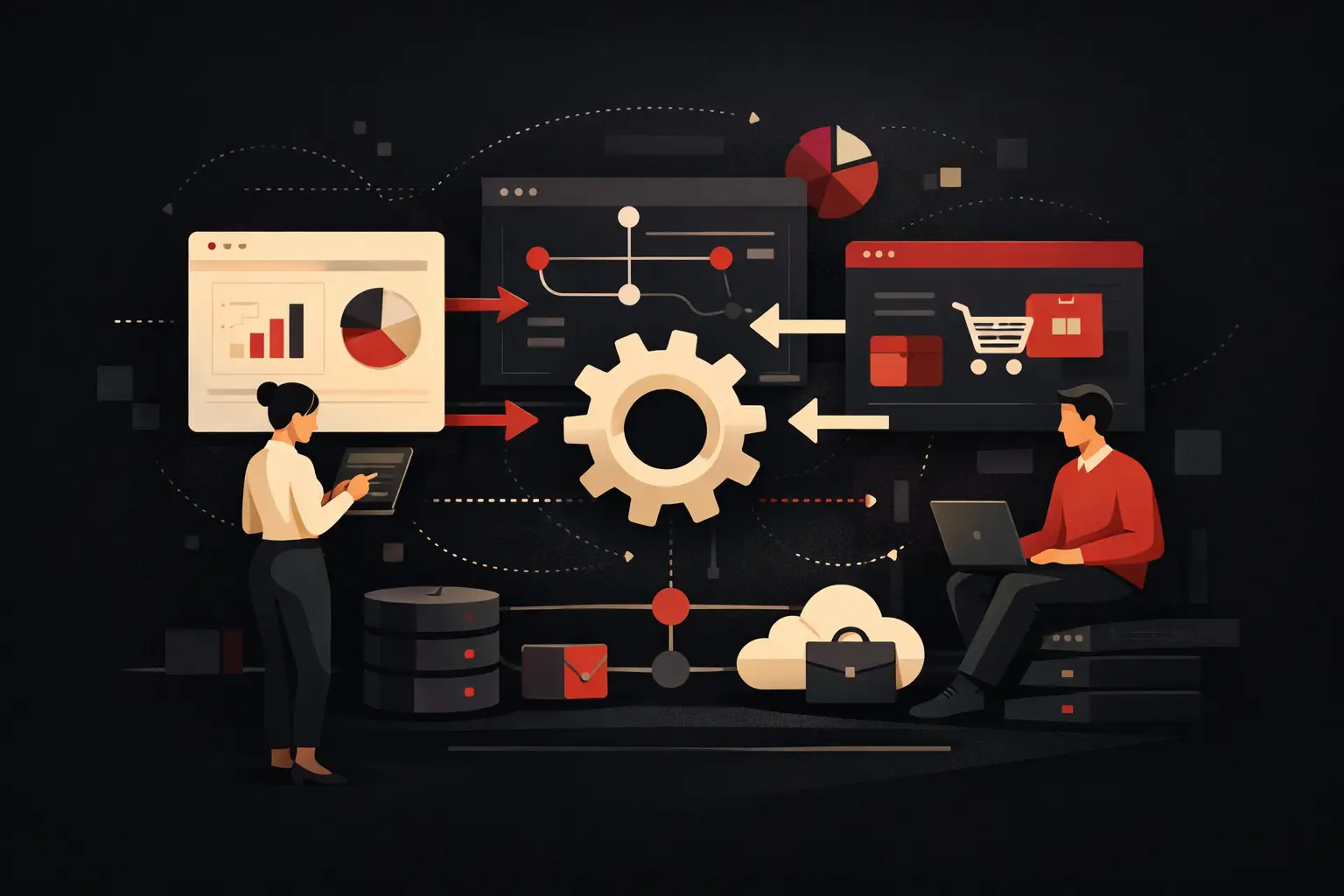
This does not mean every existing tool has to be replaced. In many cases, the most efficient solution is to build a tailored operational layer that integrates with ERP, accounting, e-commerce, CRM, time and attendance systems or existing machinery. Technology should respect the investment already made and remove real bottlenecks.
What custom production management software should control
The value of a tailored platform does not depend on the number of screens, but on the quality of the decisions it enables. Every feature should answer an operational question: what to produce, with which materials, in what sequence, for which customer, by what date and at what margin.
From order to realistic planning
The workflow can start with the quote and turn it into a job order with structured data already in place: product configuration, quantity, required operations, technical constraints, delivery date and commercial terms. If the company makes products to order, the system can apply configuration rules, calculate materials and estimated times, generate the correct bill of materials and prevent combinations that cannot be produced.
Planning should not be limited to displaying a list of tasks. It must take into account department capacity, sales priorities, material availability, procurement lead times and dependencies between operations. This way, the production manager can immediately see which jobs are at risk and step in before a delay leads to an awkward call to the customer.
Progress, quality and traceability
Every department should be able to record progress through a simple interface, from a fixed workstation, tablet or mobile device. Operators should not have to look for information across different documents: they should see the operation to perform, instructions, technical attachments, associated materials and any required quality checks.
Recording time, quantities produced, scrap, downtime and non-conformities creates a solid data foundation. It is not about monitoring people, but about identifying recurring problems: an operation taking longer than expected, a material causing scrap, a machine causing frequent downtime or an outdated bill of materials.
Traceability can also be essential for batches, serial numbers, certifications and compliance documents. The level required depends on the industry. A food, cosmetics or medical company will have different needs from a metalworking business or furniture manufacturer, but the principle remains the same: retrieving critical information should not require a manual search through archives and messages.
Custom production management software: what does “tailor-made” really mean?
Custom software is not a project built from scratch without a plan. It is a system designed around the rules that make the company competitive, avoiding both the rigidity of standard products and the unnecessary complexity of excessive development.
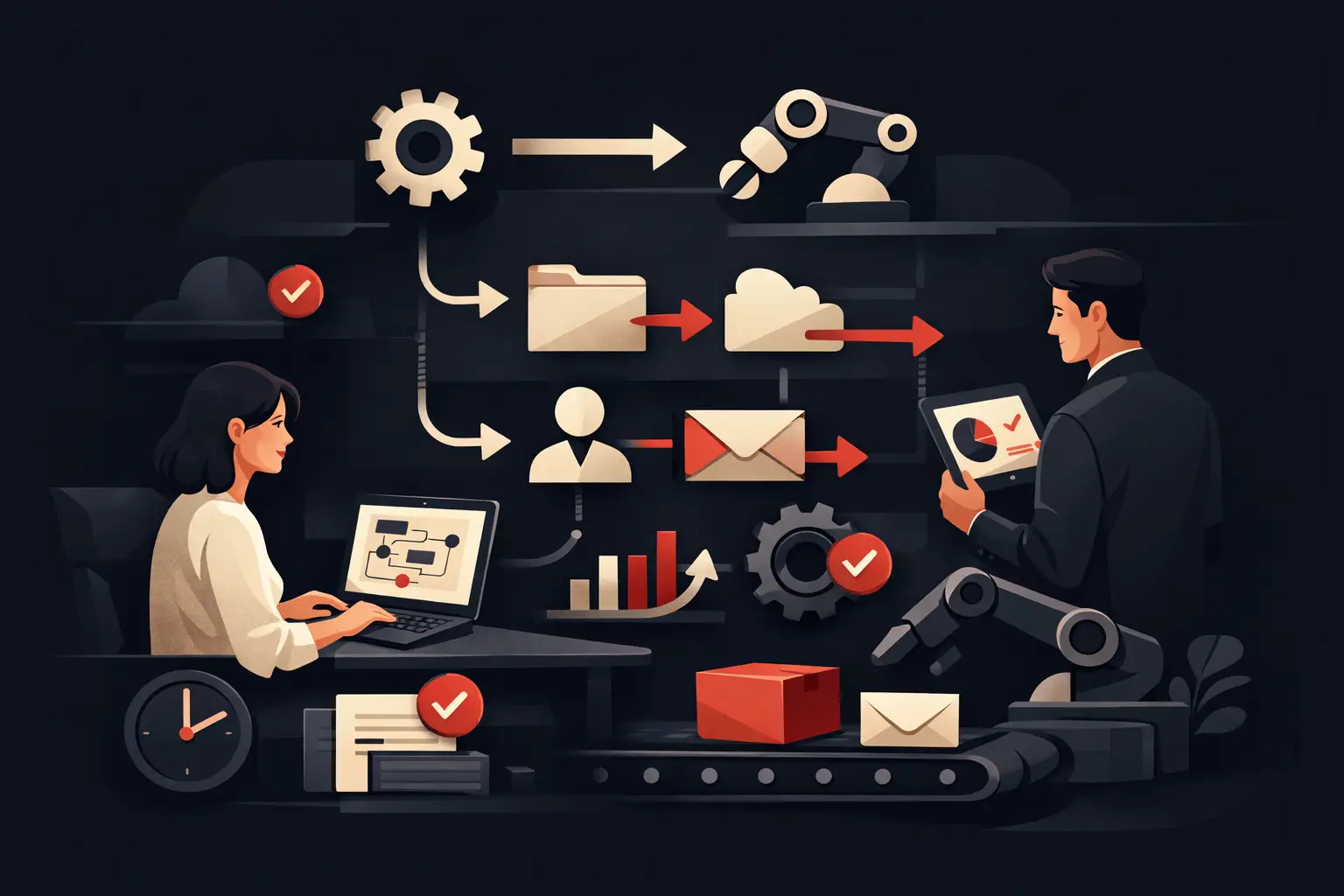
The decisive phase is workflow analysis. Steps, roles, exceptions, inputs and outputs are mapped: how an order comes in, who checks feasibility, when materials are purchased, how a job order is released, who records consumption, and how revisions and urgent requests are handled. This makes it possible to distinguish activities that require human decisions from those that can be automated.
A good project also defines permissions and responsibilities. Sales can see the status of jobs without changing the plan. The department manager can report an issue and update assigned operations. Management can access concise dashboards without delving into operational detail. Each role gets useful information, not a platform overloaded with options.
Interface design matters as much as technical architecture. If an operator has to fill in ten fields to report a completed operation, the data will be incomplete or late. If a dashboard displays fifty indicators, no one will identify the ones that require action. A clear user experience increases adoption and protects the quality of the data on which decisions are based.
How to reduce implementation risk
The greatest risk is not software development: it is building the wrong solution for a process that has not been clarified. That is why an effective project starts with measurable objectives, not an undifferentiated list of features. Cutting planning time by 30%, recording progress in real time, reducing picking errors or calculating margins by job are all verifiable objectives.
It is preferable to proceed in priority modules. An initial release can cover job orders, planning and progress tracking for a pilot department. After validating the data, roles and day-to-day use, warehouse management, quality, purchasing, a supplier portal or integrations with other systems can be added. This approach reduces operational impact and makes it possible to improve the product based on actual use.
Data migration should also be approached pragmatically. Not all historical data is worth transferring. It is often more useful to import clean master data, active items, valid bills of materials, open orders and data essential for operational continuity. Importing inconsistent archives without an initial review carries the same problems into the new system.
Training should focus on real scenarios: opening a job order, handling a change, reporting scrap, blocking a batch, closing an operation. People adopt a tool when they understand that it reduces friction in their work, not when they receive a generic presentation of its features.
Production data that drives decisions
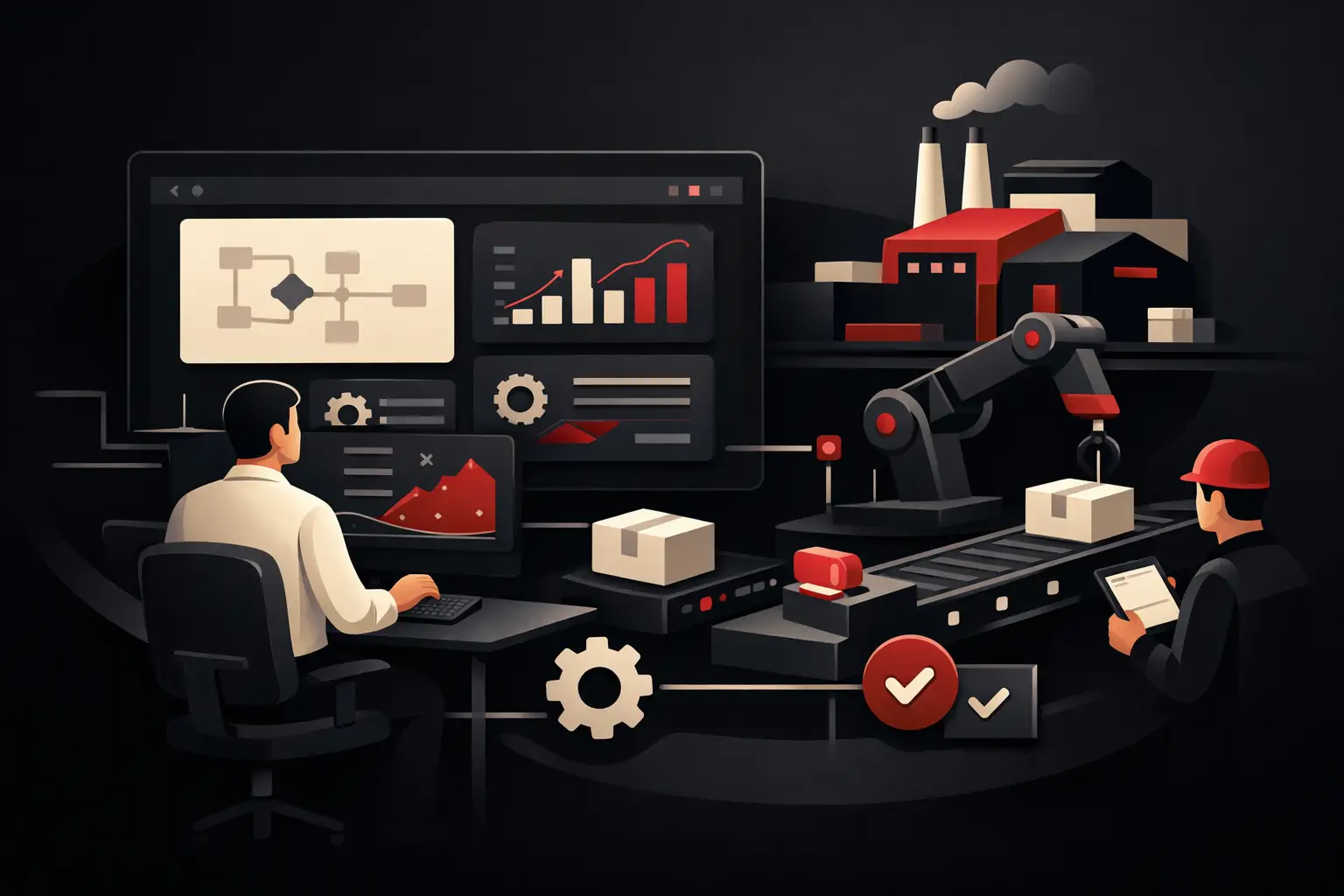
When the workflow is centralized, KPIs stop being a report prepared at the end of the month. Management can monitor on-time delivery, department utilization, average throughput times, variances between estimated and actual times, the value of jobs in progress, scrap and margins.
Data quality also enables targeted automation. The system can alert users when a job is at risk of missing its planned date, flag materials below a threshold, require approval for cost changes or suggest priorities based on delays and available capacity. Artificial intelligence can support forecasting and anomaly analysis, but it only works when it receives reliable data and well-defined processes.
Graffico designs tailored management systems based on this principle: the platform should not add administrative work, but make the work the company already does visible and manageable. The expected outcome is not more modern software to show off, but fewer delays, fewer errors and more predictable production.
So the useful question is not which management system to buy. It is which decision currently takes more time, more checks and more people than necessary. That is where a project can begin to turn operational complexity into measurable value.
Ready to bring your ideas to life?
Request a free, no-obligation consultation. Let's talk about your project.
Request a consultation