The best lead scoring tools for SMEs
The best lead scoring tools for SMEs: criteria, comparisons and integrations to prioritize contacts and accelerate measurable sales in your CRM.
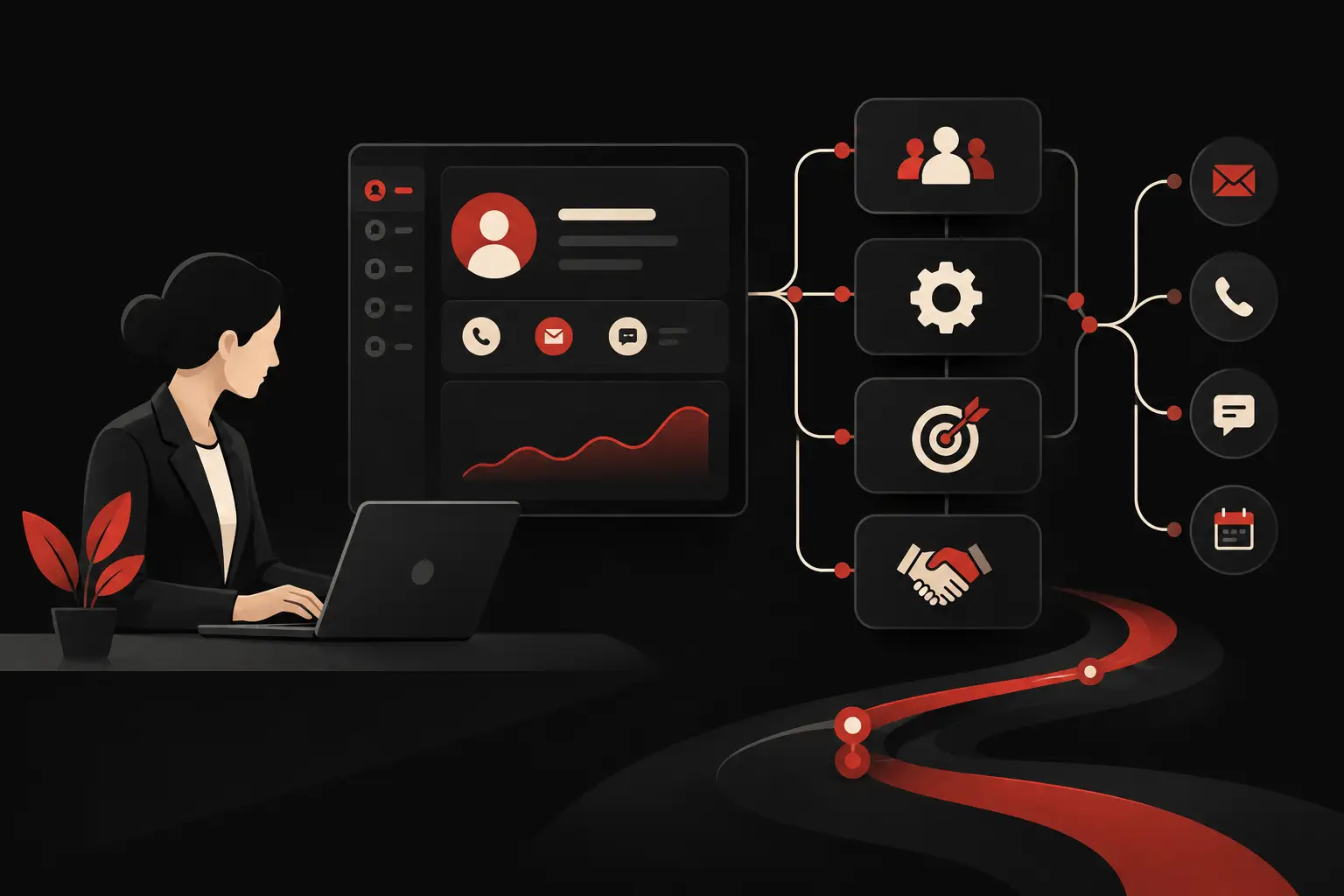
A sales rep who opens a CRM with 800 contacts every morning does not have a commitment problem: they have a prioritization problem. Without shared criteria, they call back someone who filled out a form yesterday, overlook someone who visited a decisive page three times, and waste time on requests with no real potential. The best lead scoring tools help correct this imbalance: they turn scattered signals into a list of sales actions ordered by probability and value.
For an SME, however, the point is not to buy the software with the most features. It is to build a system that reflects its sales cycle, margins, team capacity and the quality of the available data. A score is not useful simply because it assigns a number to a lead. It is useful if it clearly tells you whom to contact, when to do it and what priority to give them.
Lead scoring must reflect real-world sales
Lead scoring assigns scores to contacts based on stated characteristics and observed behavior. The first group includes, for example, industry, job title, company size, geographic area and budget. The second includes email opens, content downloads, visits to key pages, demo requests, campaign replies and interactions with the sales team.
The distinction matters. A purchasing manager at a company in the target market may look like an interesting lead on paper, but may not be ready to talk to a sales rep. Conversely, a contact who is less aligned with the ideal profile but requests a quote, visits a pricing page several times and involves other colleagues may deserve immediate attention.
The most effective model therefore combines three dimensions: company fit, level of interest and stage in the process. At a B2B company selling complex projects, the greatest weight might go to decision-making authority, revenue and signs of advanced evaluation. In an e-commerce business or one with a short sales cycle, frequency, recency and the value of digital actions will matter more.
The most common mistake is copying a generic grid: 10 points for opening a newsletter, 20 for a download, 50 for a demo. These values can be a starting point, not a strategy. If a download comes from very general content, that signal can generate false positives. If a request for technical integration often precedes high-value deals, it deserves more weight even if it comes from only a few contacts.
How to choose the best lead scoring tools
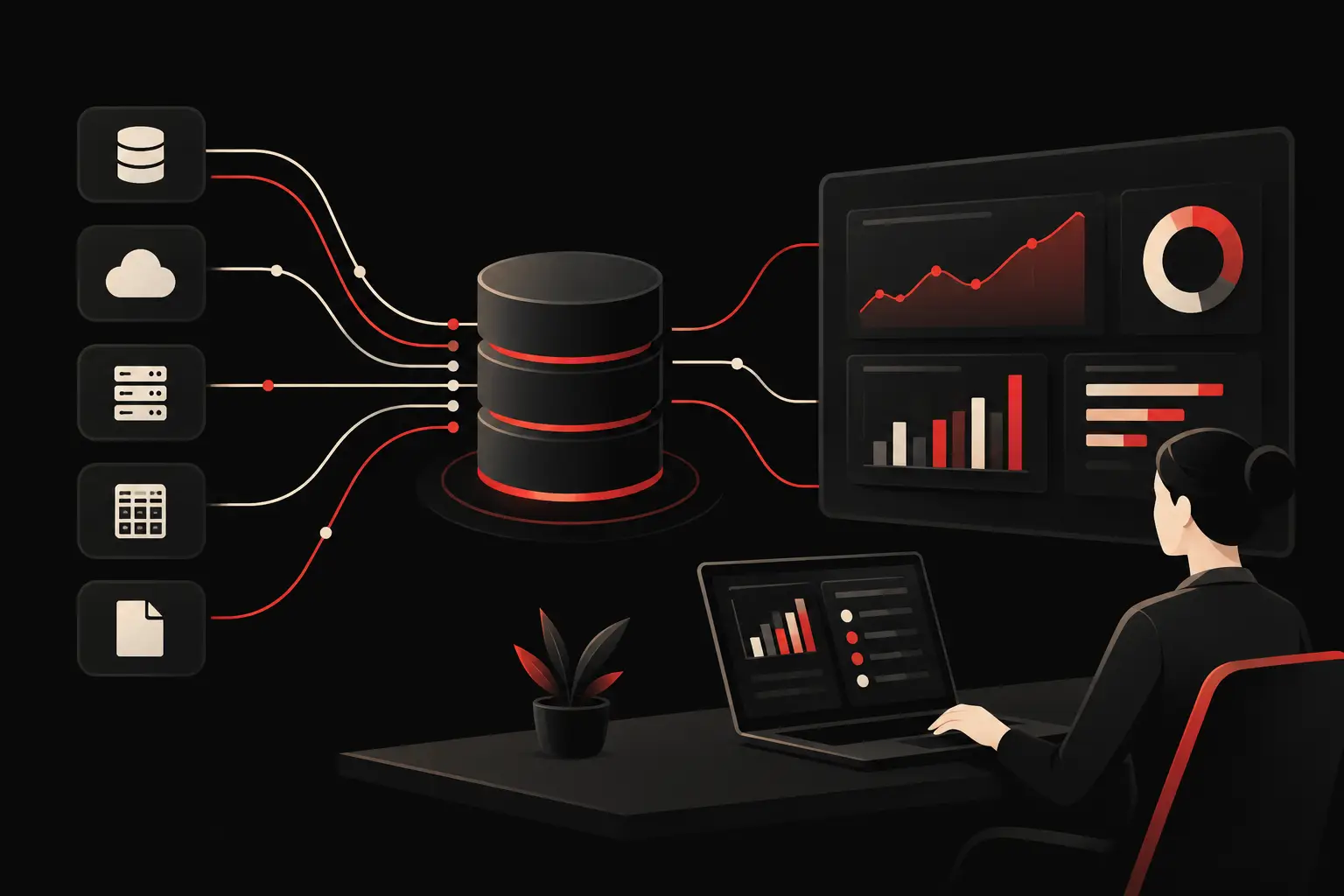
The choice should not start with the configuration screen, but with an operational question: what data do you already have, and where does it reside? Reliable lead scoring requires your CRM, website, forms, campaigns, email, sales platform and, when necessary, business management software to share consistent information.
Excellent but isolated software will produce a partial score. A CRM connected to imperfect data sources will produce the wrong priorities very efficiently. Before comparing platforms, it is worth checking five aspects.
- Data quality and availability. Are the essential fields filled in? Are duplicate companies managed? Can web activity, communications and deals be associated with the same record?
- Rule flexibility. The system should allow positive and negative scores, different thresholds by segment, points to decay over time and conditions based on multiple events.
- Actionable automations. A score should be able to create tasks, update pipelines, assign owners, send alerts and launch communications without manual steps.
- Readability for sales and marketing. The sales rep should understand why a contact has 82 points. An opaque number gets ignored or challenged.
- Governance and compliance. Access roles, consent, change tracking and personal data management must align with business processes and GDPR requirements.
Another criterion is volume. For a few dozen new qualified contacts a month, a well-designed rule-based model may be more useful than predictive algorithms. When the database is large, conversions are recorded over time and behaviors are numerous, predictive analytics can identify less obvious patterns. But it does not replace judgment about the sales process: it amplifies the quality of the data it receives.
Comparing lead scoring tools
The most suitable platforms vary with a company’s digital maturity. There is no outright winner: the right tool is the one that best integrates with the activities the team performs every day.
| Tool | When it makes sense | Strength | Watch out for | | --- | --- | --- | --- | | HubSpot | Marketing and sales work in the same environment | Brings web activity, automations, CRM and scoring together in an easy-to-understand way | Costs and complexity can grow with the database, modules and advanced features | | Salesforce | Organizations with complex processes and multiple sales teams | Deep customization, workflows and advanced analytics | Requires solid design, governance and administrative expertise | | ActiveCampaign | SMEs focused on email marketing and automation | Effective combination of behavioral scoring and campaigns | Can become limiting if the CRM needs to handle very complex B2B sales | | Pipedrive | Sales teams looking for fast adoption and clear pipelines | Ease of use and a focus on sales operations | Advanced marketing signals require additional integrations or configuration | | Zoho CRM | Companies seeking a broad, configurable ecosystem | Broad functional coverage and connections to other Zoho modules | The experience depends heavily on the quality of the initial configuration |
HubSpot for aligning marketing and sales
HubSpot is often an effective choice for SMEs that generate leads from their website, content, campaigns and forms and want to ensure a smooth handoff between marketing and sales. The benefit is not just the score: it is the ability to connect events, contact properties, workflows and sales activities in the same context.
It works well when definitions are shared. Marketing needs to know when a contact becomes a marketing-qualified lead; sales needs to agree on criteria, response times and feedback methods. Without this agreement, the software merely moves contacts between labels.
Salesforce for enterprise or highly complex processes
Salesforce makes sense when pipelines, roles, segments, channels and assignment rules require a high level of control. It can handle sophisticated scoring models and integrate many sources, but flexibility comes at a cost: it requires a clear project, not a rushed installation.
For an SME, choosing Salesforce just for the prestige of the name can be counterproductive. If the team lacks defined governance or sufficient data, many capabilities will go unused. It is a powerful platform when the organization is ready to support it.
ActiveCampaign, Pipedrive and Zoho for different needs
ActiveCampaign is a good fit when email nurturing is a central lever. Its automations can increase or decrease a score based on concrete interactions and move a contact toward sales once they reach a threshold. It is a pragmatic choice for marketing-driven processes, as long as the sales model does not require an overly complex CRM structure.
Pipedrive prioritizes adoption by the sales team. If the main problem is organizing deals, follow-ups and responsibilities, it can deliver quick results. However, lead scoring should be planned alongside integrations with the website, advertising and email, because the score’s value depends on the signals it can receive.
Zoho CRM is appealing to companies that want to connect CRM, campaigns, support, analytics and other processes in a unified ecosystem. It offers room for configuration, but for that very reason requires a precise map of workflows. Configuring everything is easy; configuring only what is needed is what creates value.
When custom lead scoring makes sense
Standard platforms cover a lot, but they do not always reflect the logic by which a company generates margin. Consider a manufacturing company: the likelihood of closing may depend on geographic area, technical compatibility, expected volume, production availability, the counterparty’s history and the urgency of supply. Or consider a services company: the number of locations, technologies already in use, project complexity and decision-maker involvement may all matter.
In these cases, a customized CRM or a scoring layer integrated with business management systems, ERP, quoting tools and KPI dashboards can reveal signals that a generic platform does not capture. The goal is not to add complexity, but to reduce manual interpretation and bring decisive information to the place where sales reps work.
A custom project becomes particularly useful when data is fragmented, when the pipeline has several technical stages or when the score needs to account for the potential value of the contract, not just the likelihood of conversion. Graffico addresses this kind of scenario by connecting processes, data and operational interfaces, so that the score becomes a practical lever for sales and operations.
From score to sales decision
The decisive test is not the theoretical accuracy of the algorithm. It is the answer to a simple question: does the team contact the right opportunities first and close more deals with the same time available?
To measure this, set clear thresholds and track the follow-up rate, time to first response, conversion by score band, average opportunity value and percentage of rejected leads for a few weeks. If high-scoring contacts do not perform better than others, the answer is not to increase sales pressure: review the rules, data or definitions.
Treat the score as a living system. Priorities change, campaigns change, the market changes, and the ideal customer profile may evolve too. The best results come when marketing, sales and operations use the same data to decide where to focus their energy. At that point, lead scoring stops being a CRM feature and becomes a more precise way to grow the business.
Ready to bring your ideas to life?
Request a free, no-obligation consultation. Let's talk about your project.
Request a consultation