Custom Online Booking System
A custom online booking system reduces errors, automates workflows, and improves conversions, operational control, and service.
When bookings come in through phone calls, email, WhatsApp, separate forms, and a manually managed calendar, the problem isn’t just organizational. It’s financial. Every manual step slows the team down, increases the margin for error, and makes it harder to turn an inquiry into revenue. A custom online booking system is designed to solve exactly this problem: centralize the workflow, reduce friction, and adapt to the way the company actually sells, schedules, and delivers its service.
For many small and medium-sized businesses, the critical issue isn’t "having an online calendar." That’s the bare minimum. The real challenge is building a system that can manage availability, commercial rules, internal resources, payments, confirmations, changes, no-shows, and reporting without forcing the business to adapt to a generic tool. When software places limits on the process, the cost shifts to people. And that cost grows every month.
When you really need a custom online booking system
Some companies can start with a standard solution and use it for a long time. Others can’t. If your operating model involves multiple locations, different operators, services of varying durations, deposits, seasonal rules, differentiated price lists, or integrations with a CRM and business management software, off-the-shelf software soon starts to show its limitations.
The first sign is duplicated work. The customer books online, but someone still has to manually check availability, send confirmations, update the internal calendar, and copy data elsewhere. The second sign is loss of control. You have bookings, but no clear view of workloads, the most profitable time slots, or cancellation rates. The third is commercial: the booking process doesn’t help conversion because it’s rigid, unclear, or disconnected from your offering.
In these cases, customization isn’t a technical luxury. It’s an operational lever.
What sets a bespoke system apart from a standard platform
A standard platform solves a common problem. A bespoke system solves yours. The difference may seem subtle, but it affects margins, timelines, and scalability.
Generic software offers predefined features: a calendar, automated confirmations, perhaps a few basic integrations. It’s useful when the business process is simple and straightforward. But if bookings depend on shared resources, capacity constraints, geographic areas, commercial priorities, or internal approval workflows, you need an architecture that better reflects operational reality.
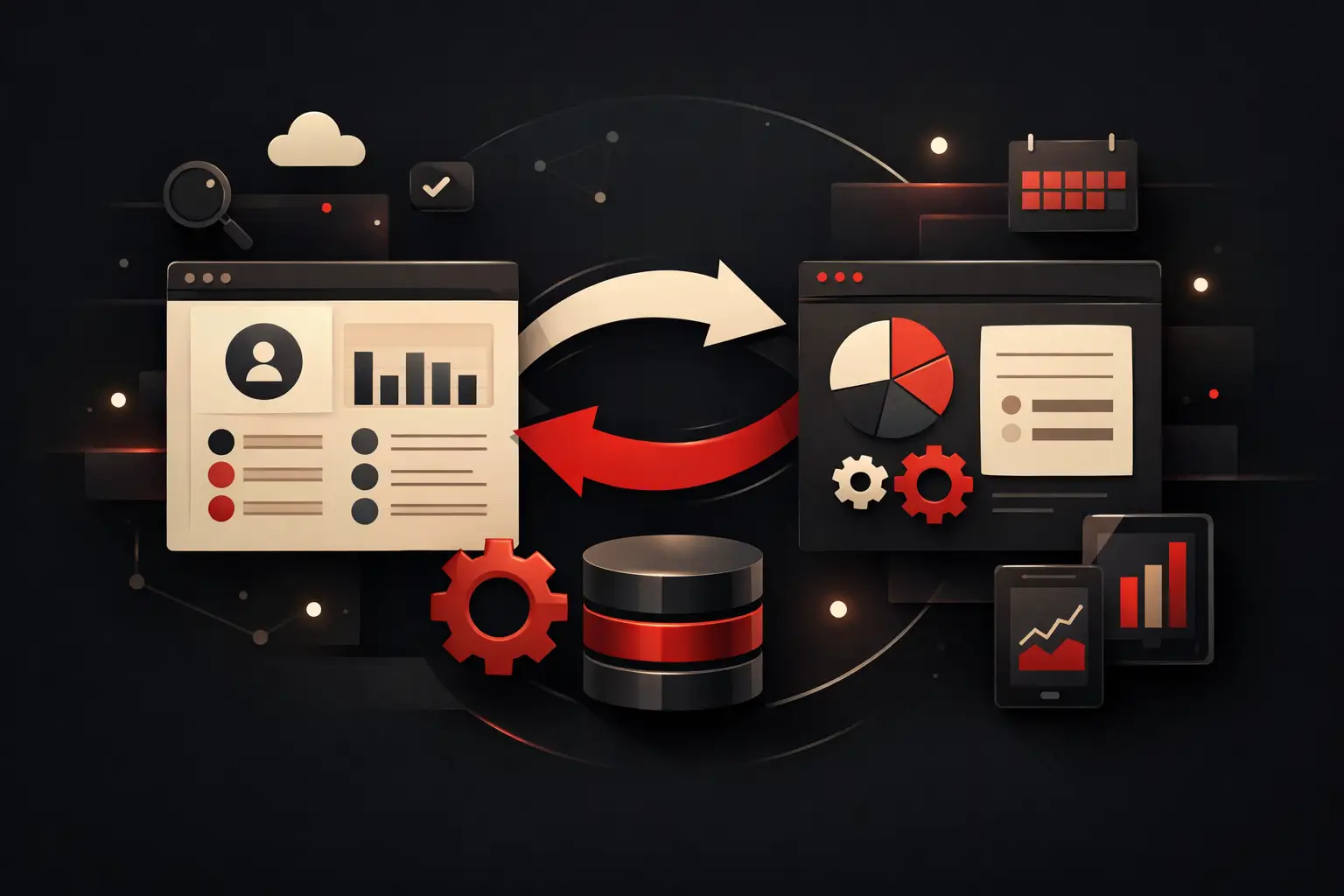
A custom system can, for example, automatically assign a request based on skills, availability, and service area. It can block time slots based on preparation or travel time. It can calculate dynamic prices, request documents before confirmation, sync appointments with the CRM, and update the customer’s status without manual intervention.
This approach delivers a specific advantage: the process is no longer split across different tools. It becomes a single, traceable, faster chain.
The features that deliver measurable results
Talking about features only makes sense when they’re connected to a concrete impact. Companies don’t buy screens. They buy recovered time, fewer errors, and greater control over workflows.
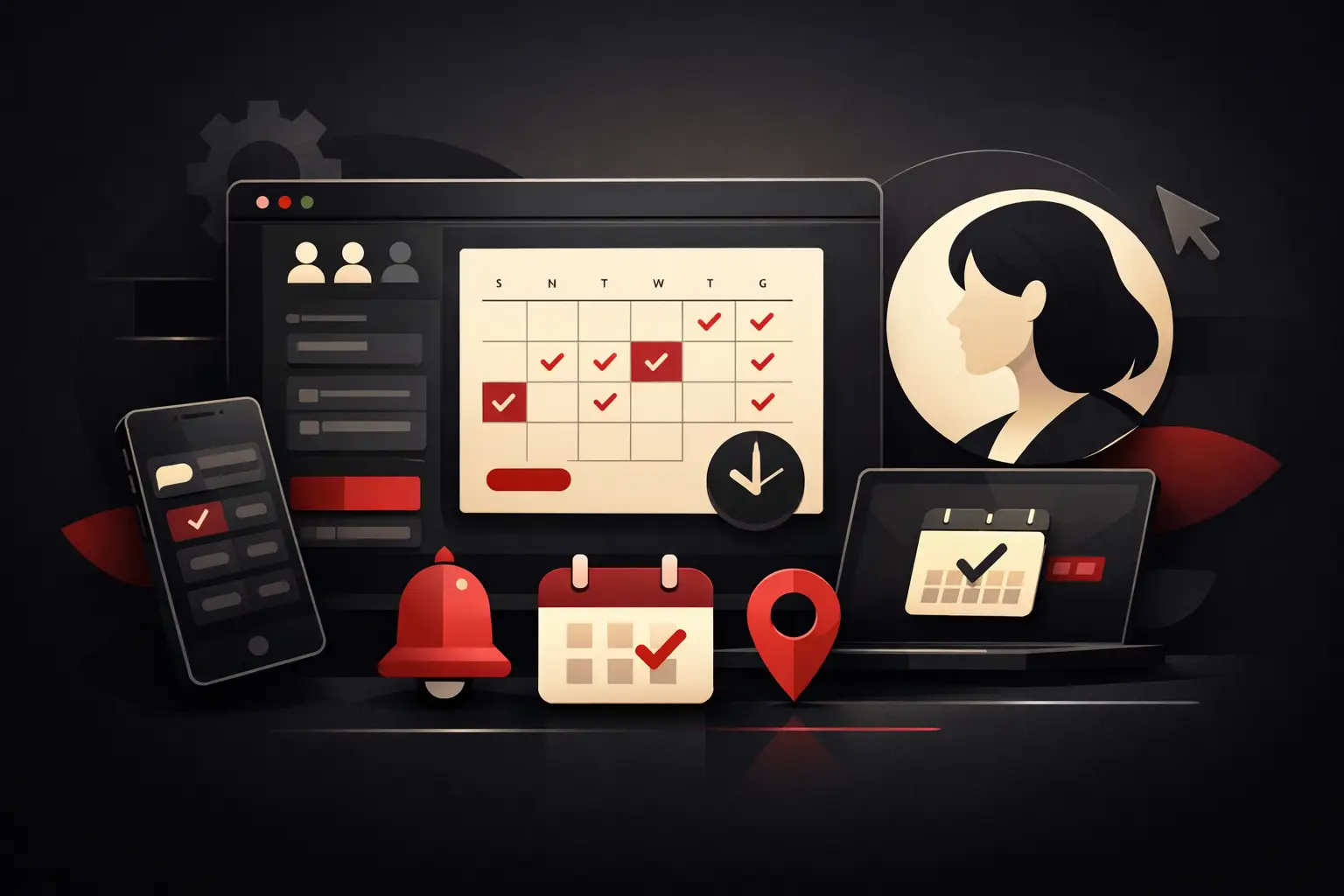
Intelligent availability management is often the first driver of efficiency. It’s not just about showing free days, but applying rules: opening hours by location, capacity by department, buffers between appointments, service priorities, and automatic blocks. When this logic is well designed, the team no longer has to constantly coordinate every small detail.
Then there’s communication automation. Confirmations, reminders, payment requests, pre-appointment instructions, and follow-ups shouldn’t depend on people’s memory. A well-built system sends useful messages at the right time, reduces no-shows, and improves how customers perceive the service.
Integration is another decisive factor. If the booking remains isolated, its value is limited. But if it feeds into a CRM, dashboards, invoicing, marketing automation, or internal systems, every new appointment generates usable data. Not just operational information, but intelligence.
Finally, there’s reporting. Knowing how many bookings come in isn’t enough. You need to understand where they come from, which services convert best, which time slots generate the most revenue, where cancellations accumulate, and which operators or locations are working below or above capacity. This is where booking stops being a simple scheduling tool and becomes a management asset.
Custom online booking system and process integration
The greatest value emerges when the system doesn’t operate on its own. In many companies, booking is just the first event in a wider workflow: lead qualification, internal assignment, service delivery, payment collection, after-sales support, and KPI analysis.
If these steps remain disconnected, growth brings complexity. If they’re integrated, growth becomes more predictable.
Imagine a technical services company operating across several areas. The customer chooses a service, enters a location or address, uploads any relevant details, and selects an available time slot. The system checks service coverage, team availability, estimated duration, and travel times. Once the appointment is confirmed, it updates the internal calendar, sends the customer a reminder, notifies the operations department, and records the contact in the CRM. After the job, it can trigger a request for feedback, an upsell, or a new appointment.
This type of workflow can’t be standardized effectively with a tool designed for everyone. It requires custom logic, careful design, and a clear view of the end-to-end process.
Trade-offs to consider before development
Customization doesn’t mean adding complexity. It means deciding what truly deserves to be built to measure.
A custom system requires more upfront analysis than a ready-made solution. That’s normal. Processes, exceptions, operational priorities, internal roles, and business objectives need to be mapped. This means a larger initial investment, but avoids paying over time through workarounds, errors, and structural limitations.
Not every company needs a fully proprietary platform. In some cases, it makes sense to develop a custom layer on top of existing components. In others, it’s better to build the application’s core from scratch, especially when booking is central to the business model. The choice depends on booking volume, the complexity of the rules, and the economic value generated by each automation.
Governance also matters. A well-designed system must be maintainable, secure, and scalable. If it’s built without an architectural vision, it may solve today’s problems while creating new ones later. That’s why useful customization isn’t about adding features at random, but translating the process into software with logic, priorities, and room to evolve.
How to design a custom online booking system that really works
The most overlooked phase is often the strategic one. Before designing the interface or starting development, you need to understand where time is being lost, where errors occur, what data departments need, and which decisions should be automated.
A good project starts with a few simple but decisive questions. Who books, and how much autonomy do they have? Which variables affect availability and price? Which steps currently require human intervention? Which systems need to receive or return data? Where do you measure ROI: fewer phone calls, fewer no-shows, more conversions, higher calendar utilization, less administrative time?
From there, you define the scope: customer-facing front end, admin panel, internal roles, scheduling rules, payments, notifications, and dashboards. Each element should be considered not as an isolated feature, but as part of a coherent workflow.
The user experience also matters far more than it may seem. A long, confusing booking process full of unnecessary fields lowers the completion rate. By contrast, a clear, fast interface that fits the brand’s positioning builds trust and increases conversion. In this sense, technology and design aren’t separate tracks. They work together toward the same goal: moving the user forward with as little friction as possible.
Why ROI isn’t measured by bookings alone
When evaluating a new system, many companies look only at the number of appointments handled. It’s a useful metric, but a partial one.
The real return includes time freed up for the team, fewer errors, fewer cancellations, better resource allocation, and higher-quality data. It also includes a subtler but very tangible commercial impact: an orderly booking process communicates reliability. And trust, especially in services, directly influences a customer’s choice.
That’s why a good booking system shouldn’t be seen as just an operational tool. It’s a critical point of contact between marketing, sales, operations, and customer care. When it works poorly, every department pays a price. When it works well, every department gains efficiency.
For companies that want to grow without multiplying internal complexity, investing in a system built around their own workflows means replacing repetitive tasks with clear rules, centralized data, and reliable automation. It’s the kind of digital infrastructure that makes no noise, but truly changes how quickly the business can move.
If your booking process currently requires constant exceptions, manual checks, and disconnected tools, you’re not just dealing with inefficiency. You’re leaving margin, time, and control on the table. And that’s often where the most useful transformation begins: making complexity measurable, manageable, and profitable at last.
Ready to bring your ideas to life?
Request a free, no-obligation consultation. Let's talk about your project.
Request a consultation