Why Use Business AI Agents to Grow
Why use business AI agents? They reduce time and errors, coordinate data and requests, and make business processes more measurable.
A customer asks about the status of an order, a sales rep updates the CRM at the end of the day, the administration team chases documents, and the operations team copies the same data between spreadsheets, emails, and business management systems. These tasks may seem small, but together they absorb hours, generate errors, and slow down decisions that should be immediate. Why use business AI agents? To turn these repetitive steps into controlled, fast, and measurable workflows without proportionally increasing the size of your in-house team.
An AI agent is not just a chat feature on a website, nor is it generic software you can switch on in a few minutes. When designed around a company’s real processes, it receives an objective, consults authorized sources, interprets requests, takes actions within defined rules, and records what happens. The result is not just a faster response: it is more organized operations, with data that can be used to improve the business.
Why use business AI agents in operational processes
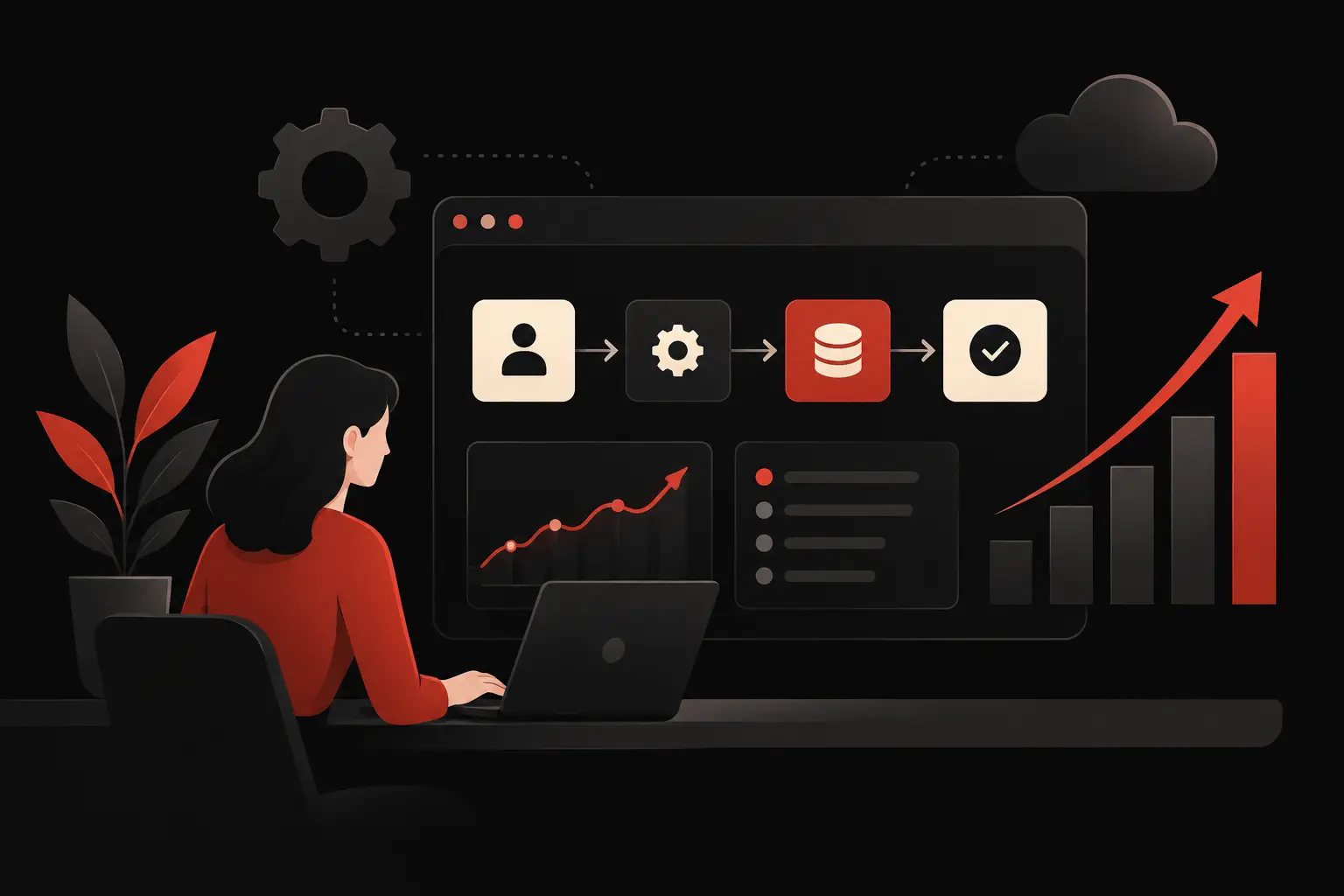
Manual work has a cost that rarely appears as a single budget line. It is spread across checks, reminders, duplicate data entry, information searches, and error correction. AI agents step in right here: they connect systems, retrieve context, and handle repeatable tasks according to shared procedures.
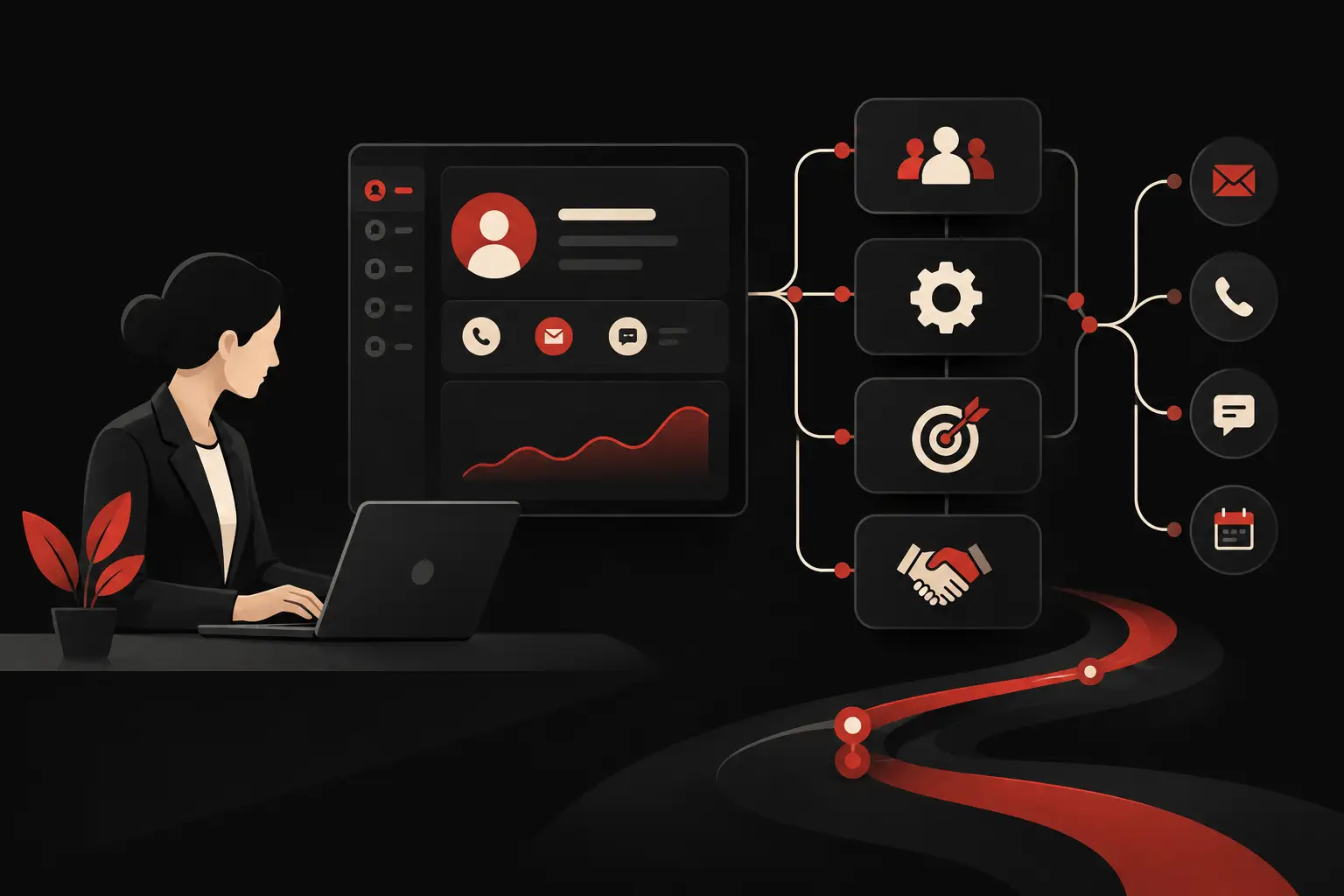
Consider a company that receives sales inquiries through forms, email, WhatsApp, and trade shows. Without a structured workflow, every contact must be read, classified, assigned, and entered into the CRM. An agent can identify the type of inquiry, extract the relevant data, check whether the information is complete, create or update the contact, and route the lead to the right sales rep. The team can step in when expertise, negotiation, or strategic judgment is needed—not to copy data.
The same principle applies to customer care. An agent can answer common questions about deliveries, availability, appointments, or documentation by consulting only up-to-date company sources. If it detects an unusual case, it opens a ticket with the context already gathered and assigns it to the right person. Customers avoid unnecessary waiting, while the support team focuses on exceptions and higher-value issues.
From speed to better decision-making
Speed is an advantage only if it does not compromise control. A well-designed business AI project also makes the flow of information more reliable. When an agent reads data from the CRM, ERP, order management system, or internal database, it can flag anomalies, delays, and opportunities that might otherwise emerge too late.
An operations manager can receive an alert if an order is at risk of exceeding a delay threshold. A sales director can get a summary of stalled deals, prioritized by potential value and next action. The administration team can spot missing documents before they hold up invoicing. This is not about replacing managerial judgment; it is about bringing relevant information to the table while it is still useful.
An AI agent is not a generic chatbot
The key difference is integration with the company’s digital ecosystem. A standalone chatbot can provide informational answers, but it does not really know a customer’s status, update a business management system, or trigger a workflow. A properly designed agent can do these things, provided that roles, data, and permissions are precisely defined.
For example, an agent for the purchasing department can analyze internal requests, check the available budget, compare supplier history, and prepare a draft purchase order for approval. It should not make every purchasing decision on its own. It should reduce the time spent on initial checks, make the process traceable, and give the manager a complete proposal.
This distinction helps avoid one of the most damaging expectations: asking AI to solve processes that have not first been clarified. If responsibilities are unclear, data sources are inconsistent, or procedures change depending on who is handling the case, the agent will amplify that confusion. Automation does not replace organizational design. It makes it urgent and, if done well, finally measurable.
Where AI agents generate the most value
The potential is broad, but not every process deserves the same level of investment. It makes sense to start with activities characterized by high volume, repetition, clear rules, and an already noticeable operating cost. For many SMEs, there are four priority areas:
- lead qualification and management, with automatic CRM updates and follow-ups;
- first-level customer support, with escalation of complex cases;
- document management, data extraction, and completeness checks for files or orders;
- operational monitoring, with alerts, reports, and analysis of anomalies across data spread over multiple systems.
The right choice depends on the bottleneck. For an e-commerce business with many after-sales inquiries, customer support may be the priority. For a B2B company with a long sales cycle, it may be qualifying contacts and reviving stalled opportunities. For a manufacturing business, coordinating orders, production, and suppliers may have a greater impact.
The goal is not to use AI everywhere. It is to intervene where improvements in speed, accuracy, or responsiveness produce a recognizable economic impact.
How to evaluate return on investment
A serious project starts with a baseline. Before implementation, you need to measure how long the process currently takes, how many manual steps it involves, how many requests are handled, which errors recur, and where delays build up. Without this starting point, talking about ROI remains a theoretical exercise.
Useful metrics vary by use case. In sales, you can track lead response time, contact rate, conversion, and pipeline value. In customer care, average response time, the percentage of requests resolved on first contact, escalation volume, and customer satisfaction matter. In administrative processes, processing times, missing data, data-entry errors, and completed files become key metrics.
There is also a less immediate but very tangible benefit: scalability. If volumes increase by 30%, a manual process often requires more people, more coordination, and allows for more errors. A well-integrated AI agent can absorb some of that growth with a leaner structure. It does not eliminate the need for in-house expertise, but it allows people to focus on tasks that require judgment, relationships, and accountability.
Security, control, and limits to design
Adopting AI agents requires discipline. Sensitive data, price lists, customer information, and company documents cannot be handled without clear policies. You need role-based access, selected data sources, activity logs, approval thresholds, and rules for human escalation.
Not every task should be fully automated. An agent can draft a sales response, but sending a non-standard offer may require a manager’s approval. It can identify an accounting anomaly, but it should not make irreversible changes without verification. The level of autonomy must be decided process by process, according to risk and impact.
Source quality is also critical. If the CRM is incomplete or the knowledge base contains contradictory information, the agent will not have a reliable foundation to work from. That is why the initial phase often includes data cleanup, workflow mapping and defining exceptions. This is design work, not a technical detail.
The right approach: start with a process, not the technology
The most effective approach is to select a focused use case with clear objectives and a measurable impact. Analyze the current workflow, establish which tools to integrate, and define which decisions the agent can make and which it must refer to a person. Then test it within a controlled scope, monitor errors and processing times, and optimize before expanding the solution.
This approach avoids both projects that are too small to produce any change and projects that are too ambitious and attempt to digitize the entire company all at once. Graffico treats AI agents as components of a broader operating system: CRMs, business management systems, dashboards, portals, and automations need to work together to generate a real advantage.
The useful question is not whether your company should adopt AI because everyone else is doing it. It is which process is slowing down sales, service, or operations today, and how much it will cost to leave it unchanged for another twelve months.
Ready to bring your ideas to life?
Request a free, no-obligation consultation. Let's talk about your project.
Request a consultation